
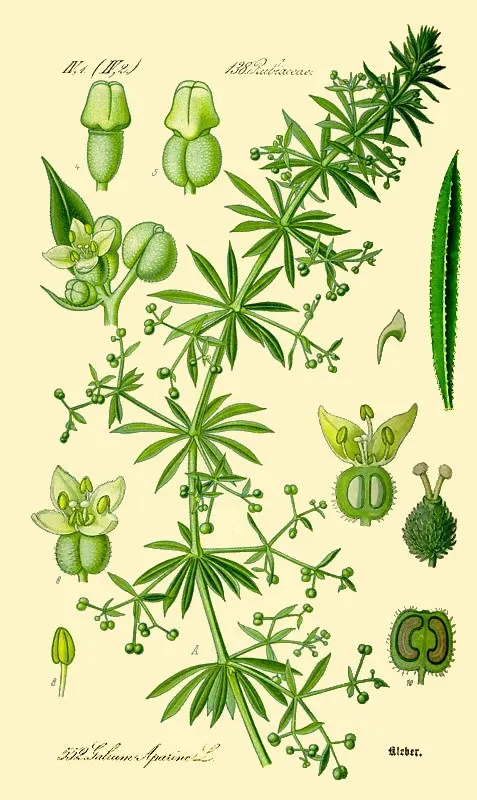
Cleavers / Goosegrass
Galium aparine
Other names: Cleavers / Goosegrass
Edible plantPhoto credit: Wikimedia Commons contributor
Safety information
Safety information
Toxicity: Generally regarded as low toxicity. Contact with the clinging hairs can cause mild skin irritation in some people; caffeine-free.
Contraindications: Hypersensitivity. Diuretic folk use: caution in those who should not increase urine output (heart/kidney disease - theoretical). Limited pregnancy/breastfeeding data.
Interactions: Theoretical additive effect with diuretics - consult provider; otherwise none documented.
Pregnancy & breastfeeding: Limited pregnancy/breastfeeding data.
Evidence level
Reported in folk medicine sources; not clinically validated. Folk and historical sources have not been validated by clinical research.
Preparations
infusion · aerial parts
Part used: aerial parts
Traditional use: Traditionally used as the best tonic for the lymphatic system - swollen glands, tonsillitis - and for dry skin conditions like psoriasis and for cystitis.
How to prepare (traditional): Infusion: pour 1 cup of boiling water over 2-3 teaspoons of dried herb and infuse 10-15 minutes. Fresh cleavers can be juiced or pureed (used immediately or frozen; an ice-cube-sized piece is a dose).
Dosage note (descriptive only): Drunk three times a day (may be drunk freely).
tincture · aerial parts
Part used: aerial parts
Traditional use: Lymphatic tonic.
How to prepare (traditional): Tincture at 1:5 in 25% alcohol.
Dosage note (descriptive only): 4-8 ml three times a day.
Associated conditions
Edibility
Edible parts: young shoots cooked (clinging texture softens with cooking); roasted fruits/seeds used as a coffee substitute (Galium is in the same family as coffee, Rubiaceae)
Toxic lookalike warning
Cleavers has a distinctive sticky, whorled-leaf, square-stemmed habit; foragers should still positively identify before eating and avoid confusing young growth with unrelated weeds.
Nutritional notes
Minor wild-food use; negligible established nutrition data.
Healing traditions
Related plants
Sources (2)
- Standard Western foraging/ethnobotany and herbal references
- no EMA/NCCIH monograph (folk status noted honestly)
Sourcing & resources
Affiliate links — we may earn a small commission at no extra cost to you.