
Safety information
Safety information
Toxicity: Mild.
Contraindications: Avoid if allergic to aspirin/salicylates.
Interactions: Caution alongside salicylate/anticoagulant drugs.
Evidence level
Documented in systematic traditional medicine literature.
Preparations
infusion · aerial parts
Part used: aerial parts
Traditional use: Traditionally used as a digestive remedy for heartburn, hyperacidity, gastritis and peptic ulceration, for children's diarrhoea, and (its salicylates) to reduce fever and ease rheumatic pain.
How to prepare (traditional): Infusion: pour 1 cup of boiling water over 1-2 teaspoons of dried herb and infuse, covered, 10-15 minutes.
Dosage note (descriptive only): Drunk three times a day or as needed. BHC: 2-6 g dried herb three times daily.
tincture · aerial parts
Part used: aerial parts
Traditional use: Traditionally applied to painful joints.
How to prepare (traditional): Tincture of the flowering tops/leaves; a pad soaked in tincture and applied externally.
Dosage note (descriptive only): For painful joints, the book suggests soaking a pad in 5 tsp (25 ml) tincture and applying to the area.
other · aerial parts
Part used: aerial parts
Traditional use: Traditionally taken for rheumatic aches.
How to prepare (traditional): Tablets.
Dosage note (descriptive only): Taken for rheumatic aches.
decoction · aerial parts
Part used: aerial parts
Traditional use: Traditionally taken for diarrhea (considered safe even in children per the book).
How to prepare (traditional): Decoction of the herb.
Dosage note (descriptive only): For diarrhea, the book suggests about 3/4 cup (150 ml) two to three times a day.
powder · aerial parts
Part used: aerial parts
Traditional use: Traditionally taken for acidity.
How to prepare (traditional): Powder mixed with a little water.
Dosage note (descriptive only): For acidity, the book suggests 1/2 tsp mixed with a little water three times a day.
Associated conditions
Edibility
Edible parts: Flowers historically used to flavour mead/drinks; not a food crop
Toxic lookalike warning
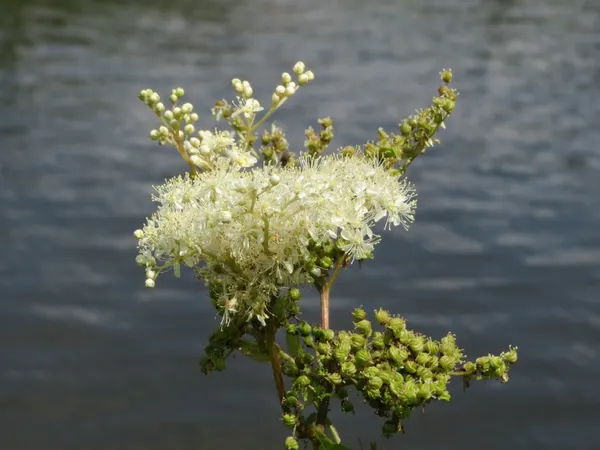
Confirm by almond-scented creamy flower sprays before use of wild material.
Nutritional notes
None notable.
Healing traditions
Related plants
Sources (1)
- Chevallier A., Encyclopedia of Herbal Medicine (2016) — Andrew Chevallier (2016)
Sourcing & resources
Affiliate links — we may earn a small commission at no extra cost to you.