
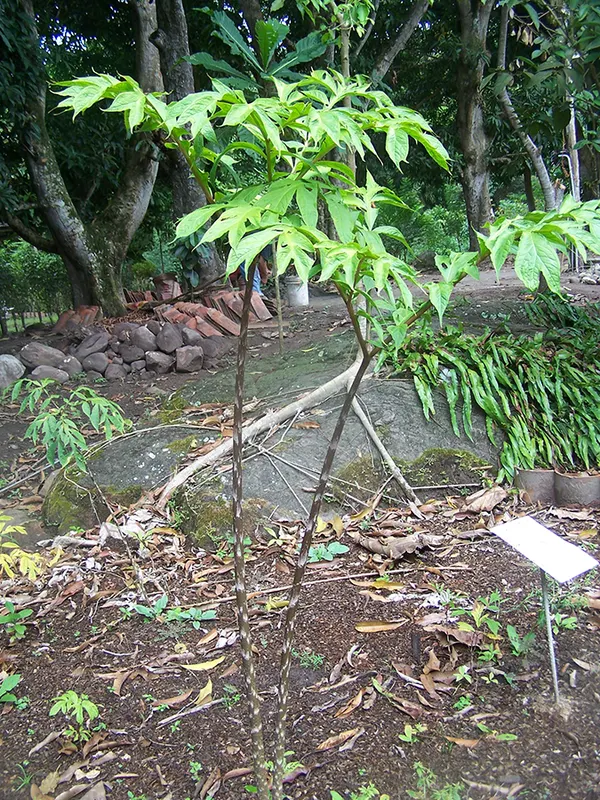
This plant carries serious safety risks. All information is for educational reference only.
Safety information
Toxicity: As an aroid (Araceae), raw plant tissue characteristically contains irritant calcium-oxalate raphides (mouth/throat/GI irritation) unless properly processed; safety data are sparse. Relying on it instead of antivenom for a real snakebite is itself the gravest hazard.
Contraindications: Not a substitute for emergency snakebite treatment; pregnancy and pediatric use unstudied; raw-aroid irritant risk.
Interactions: Not characterized (insufficient data).
Pregnancy & breastfeeding: Pregnancy and pediatric use unstudied.
Evidence level
Supported by laboratory or animal studies; not yet confirmed in humans.
Preparations
This plant carries serious safety risks. All information is for educational reference only.
traditional cold-water tuber maceration taken orally, and chopped-tuber poultice (general categories only — FLAGGED) · tuber/rhizome
Part used: tuber/rhizome
Traditional use: folk antidote/first-aid for venomous snakebite, reputed for inflammation and immune/viral complaints
Proposed mechanism: aqueous tuber extract neutralized Bothrops atrox lethal activity (preclinical)
Dosage note (descriptive only): no specific method or quantities provided
Reference only — not a dosage instruction
Associated conditions
Nutritional notes
Not relevant.
Healing traditions
Related plants
Sources (2)
- Jergon sacha — Dracontium (Tropical Plant Database), Raintree — compiled folk source
- Efecto neutralizador del extracto acuoso de Dracontium loretense sobre veneno de Bothrops atrox, Rev. Peru. Med. Exp. Salud Publica, 2006