
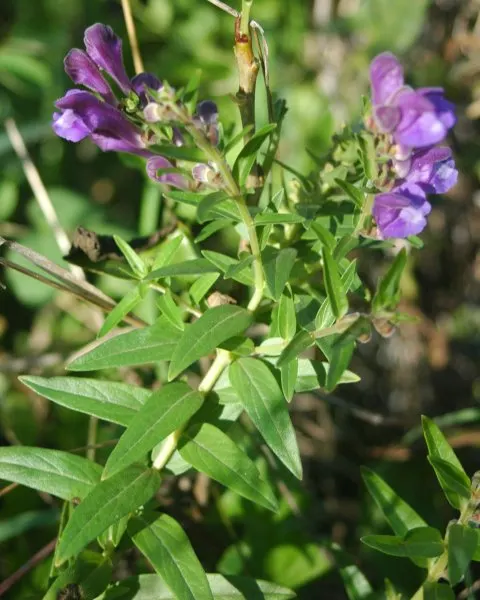
Safety information
Safety information
Toxicity: Mild. | Several reports/case series of acute liver injury with jaundice 1-3 months after starting herbal/dietary supplements containing S. baicalensis (often multi-ingredient products).
Contraindications: Best taken under professional supervision. | Pre-existing liver disease; pregnancy data limited.
Interactions: None specifically noted. | Potential additive hepatotoxicity with other liver-stressing agents; possible effects on drug metabolism.
Pregnancy & breastfeeding: Data limited.
Evidence level
Supported by clinical trials in humans.
Preparations
decoction · root
Part used: root
Traditional use: Traditionally for headaches.
How to prepare (traditional): Combined remedy: decoct about 15 g baical skullcap root with about 10 g self-heal.
Dosage note (descriptive only): For headaches, drink about 75 ml 3 times a day.
tincture · root
Part used: root
Traditional use: Traditionally for hay fever and allergic conditions.
How to prepare (traditional): Tincture of the root taken with water.
Dosage note (descriptive only): For hay fever, take 40 drops with water 3 times a day.
Associated conditions
Nutritional notes
Not a food. | Not a nutritional food; active flavones (baicalein/baicalin/wogonin), beta-sitosterol.
Healing traditions
Related plants
Sources (4)
- Chevallier A., Encyclopedia of Herbal Medicine (2016) — Andrew Chevallier (2016)
- Scutellaria baicalensis (Wikipedia), English, accessed 2026, https://en.wikipedia.org/wiki/Scutellaria_baicalensis
- LiverTox: Scutellaria (NCBI Bookshelf NBK548757), English, https://www.ncbi.nlm.nih.gov/books/NBK548757/
- Li & Chen, isolation of baicalein/wogonin/oroxylin A, J Chromatogr A 2005
Sourcing & resources
Affiliate links — we may earn a small commission at no extra cost to you.