
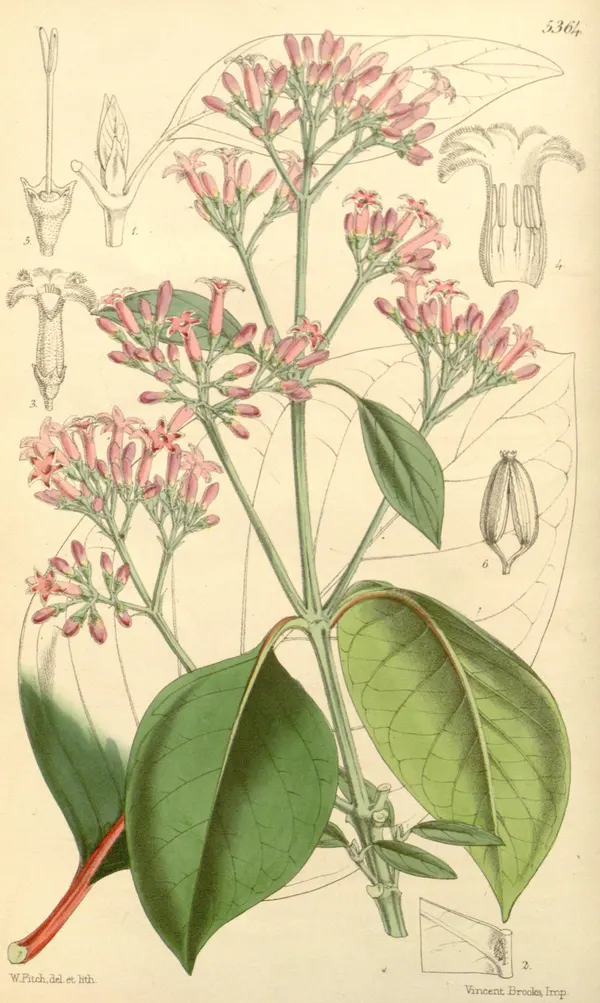
Cinchona / Quina
Cinchona officinalis
Photo credit: Curtis's Botanical Magazine (Royal Botanic Gardens, Kew)
This plant carries serious safety risks. All information is for educational reference only.
Safety information
Toxicity: Serious. Overdose of bark/quinine causes cinchonism (tinnitus, reversible hearing loss, blurred vision, headache, nausea, vomiting, vertigo, confusion) and at higher exposure cardiotoxicity — QT/QRS prolongation, conduction block, arrhythmia, negative inotropy — plus possible acute renal failure and hypoglycemia. Narrow therapeutic margin.
Contraindications: Pregnancy (possible teratogenicity; dangerous as an abortifacient), G6PD deficiency, pre-existing QT prolongation/cardiac conduction disease, tinnitus/optic-neuritis history, myasthenia gravis, prior quinine hypersensitivity/thrombocytopenia.
Interactions: QT-prolonging drugs (other antiarrhythmics, macrolides, antipsychotics), anticoagulants (warfarin potentiation), digoxin, other antimalarials, CYP3A4 inhibitors; additive cardiotoxic and hematologic risks.
Pregnancy & breastfeeding: Pregnancy: possible teratogenicity; dangerous as an abortifacient — contraindicated.
Evidence level
Supported by clinical trials in humans.
Preparations
This plant carries serious safety risks. All information is for educational reference only.
traditional bark infusion/decoction (general category only — FLAGGED) · bark
Part used: bark
Traditional use: fevers; historically antimalarial ('Jesuit's bark'); cultural/historical context only
Proposed mechanism: alkaloid quinine — antimalarial efficacy established
Dosage note (descriptive only): NO dosing given; no extraction method provided
Reference only — not a dosage instruction
Associated conditions
Nutritional notes
Not relevant.
Healing traditions
Related plants
Sources (3)
- Arrhythmogenic cardiotoxicity of quinoline antimalarial drugs, 2018 (PMC6220451)
- A Ten-Year Review on Ethnopharmacology of Antimalarial Plants, Front Pharmacol, 2021 (PMC8493299)
- The Fever Tree, 2018 (PMC6316520)