
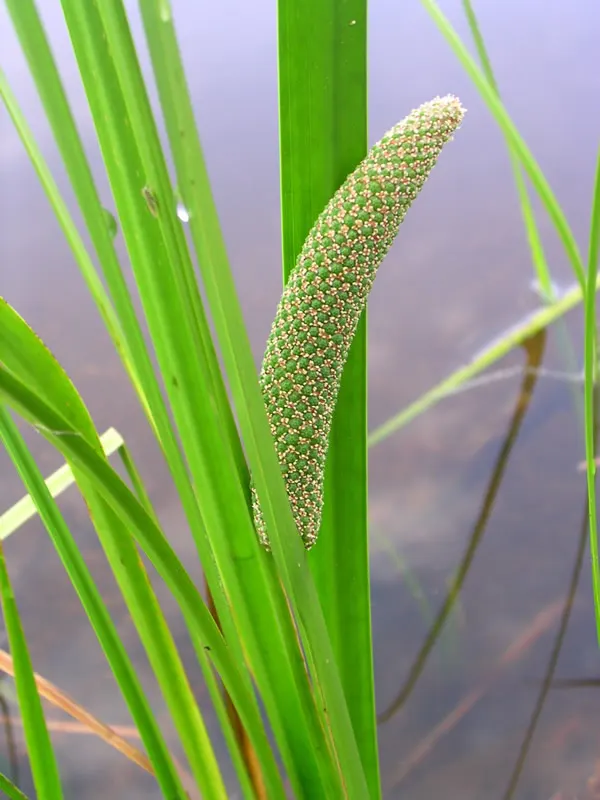
Sweet flag (North American calamus)
Acorus americanus
Photo credit: Jack Greenlee, U.S. Forest Service
Safety information
Safety information
Toxicity: Species/chemotype dependent. Beta-asarone is genotoxic/carcinogenic in animals; Eurasian calamus oil is restricted. North American A. americanus is generally lower-risk but data are incomplete — caution with quantity/chronicity.
Contraindications: Pregnancy; prolonged/high-dose internal use; avoid beta-asarone-rich Eurasian material.
Interactions: Sedative/CNS effects — caution with CNS depressants.
Pregnancy & breastfeeding: Caution in pregnancy.
Evidence level
Supported by laboratory or animal studies; not yet confirmed in humans.
Preparations
decoction · rhizome
Part used: rhizome
carried as a charm · rhizome
Part used: rhizome
chewed rhizome · rhizome
Part used: rhizome
Traditional use: sore throat, colds/cough, toothache, fatigue on long journeys (stimulant), GI complaints; ceremonial/protective charm
Proposed mechanism: aromatic oils; North American diploid A. americanus is reported low/absent in beta-asarone, unlike some Eurasian A. calamus
Dosage note (descriptive only): avoid prolonged/high-dose internal use
Associated conditions
Nutritional notes
n/a (aromatic).
Healing traditions
Related plants
Sources (3)
- Moerman, Native American Ethnobotany — Daniel Moerman
- USDA NRCS PLANTS Database
- beta-asarone reviews
Sourcing & resources
Affiliate links — we may earn a small commission at no extra cost to you.