
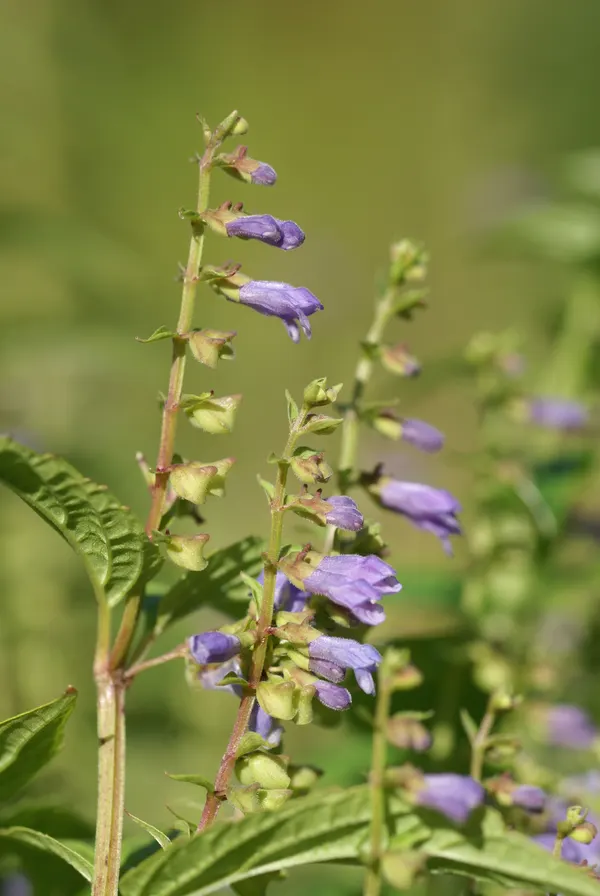
Safety information
Safety information
Toxicity: Earlier hepatotoxicity reports traced to adulteration with germander (not skullcap itself).
Contraindications: None specifically named (verify identity to avoid germander adulteration).
Interactions: Can potentiate the effects of sedative medications.
Evidence level
Supported by clinical trials in humans.
Preparations
infusion · aerial parts
Part used: aerial parts
Traditional use: Traditionally used as a nervine tonic to soothe nervous tension and restore the nervous system - exhaustion, anxiety, premenstrual tension - with traditional use for petit mal seizures.
How to prepare (traditional): Infusion: pour 1 cup of boiling water over 1-2 teaspoons of dried herb and infuse 10-15 minutes.
Dosage note (descriptive only): Drunk three times a day or as needed. BHP: 1-2 g dried herb three times a day.
tincture · aerial parts
Part used: aerial parts
Traditional use: Traditionally for nervous tension and headaches.
How to prepare (traditional): Tincture of the aerial parts taken with water.
Dosage note (descriptive only): Take about 1/2 tsp with water twice a day.
capsule · aerial parts
Part used: aerial parts
Traditional use: Traditionally for nervous exhaustion.
How to prepare (traditional): Capsules of the aerial parts.
Dosage note (descriptive only): For nervous exhaustion, take a 200 mg capsule twice daily.
other · aerial parts
Part used: aerial parts
Traditional use: Taken for insomnia.
How to prepare (traditional): Tablets, often containing other sedative herbs.
Associated conditions
Healing traditions
Related plants
Sources (1)
- Hoffmann D., Medical Herbalism (2003) — David Hoffmann (2003)
Sourcing & resources
Affiliate links — we may earn a small commission at no extra cost to you.