
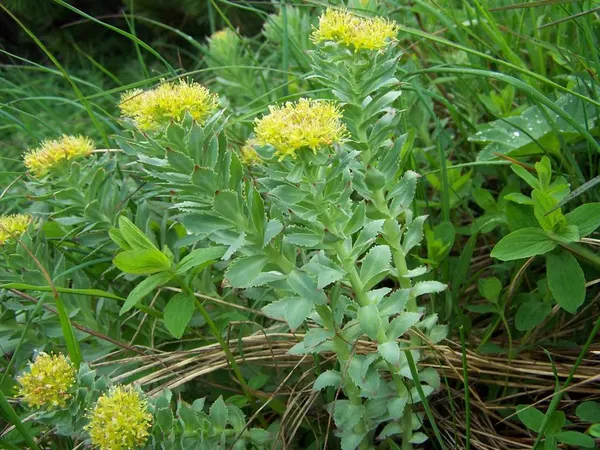
Safety information
Safety information
Toxicity: Mild — can cause irritability or sleep disturbance. | Generally low at typical doses; robust data limited. Mild dizziness, dry mouth, jitteriness/over-stimulation occasionally reported. FDA warning letters against false claims.
Contraindications: Not advisable in bipolar/manic conditions (stimulating). | Not well established. Safety in pregnancy/lactation not studied — avoid as precaution (precautionary only). Stimulating quality argues against late-day use in those prone to insomnia.
Interactions: Caution with antidepressants/psychiatric medication. | Not well established. Theoretical additive effect with stimulants and serotonergic antidepressants; caution with antidiabetic/antihypertensive drugs — not verified in a cited clinical source.
Pregnancy & breastfeeding: Safety not studied — avoid as a precaution (not verified for a specific harm).
Evidence level
Supported by clinical trials in humans.
Preparations
decoction · root
Part used: root
Traditional use: Traditionally to promote physical endurance.
How to prepare (traditional): Decoction of the root/rhizome.
Dosage note (descriptive only): Take about 2.5 tsp twice a day to promote physical endurance.
tincture · root
Part used: root
Traditional use: To support memory and concentration.
How to prepare (traditional): Tincture of the root.
Dosage note (descriptive only): Take about 1/2 tsp 2–3 times a day.
other · root
Part used: root
Traditional use: For lowered mood and vitality.
How to prepare (traditional): Tablets.
Dosage note (descriptive only): Take as recommended by the supplier.
Associated conditions
Edibility
Edible parts: Young leaves and shoots eaten raw (bitter) or cooked like spinach / in salads.
Toxic lookalike warning
Harvested for thick rootstock in alpine/Arctic habitats; positively identify the dioecious yellow-flowered Crassulaceae; never eat unidentified alpine succulents.
Nutritional notes
Not a food. | Leaves/shoots a minor wild green; root actives are polyphenols (rosavin, rosarin, rosin, salidroside, tyrosol).
Healing traditions
Related plants
Sources (4)
- Chevallier A., Encyclopedia of Herbal Medicine (2016) — Andrew Chevallier (2016)
- Rhodiola rosea — Wikipedia (cites NCCIH, EMA 2012, Panossian 2010), 2026
- Rhodiola — NCCIH/NIH, 2016
- Ishaque et al., BMC Complement Altern Med 2012;12:70 (PMC3541197)
Sourcing & resources
Affiliate links — we may earn a small commission at no extra cost to you.