
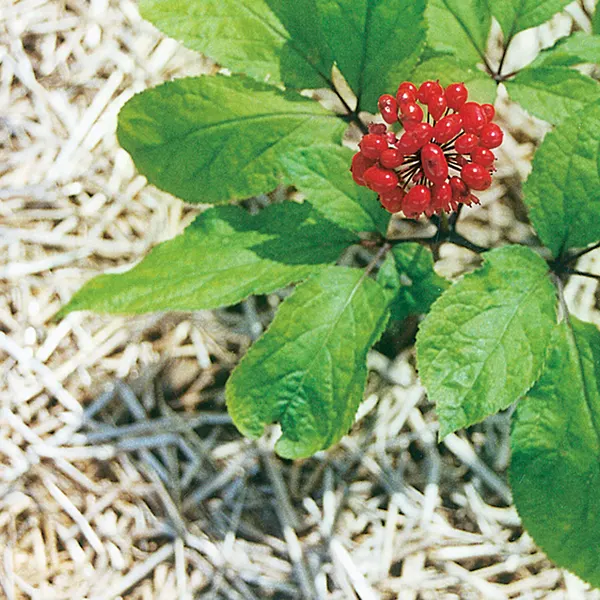
Safety information
Safety information
Toxicity: Use with care — can cause insomnia and raise blood pressure if over-dosed. | None known reported. | Generally safe for adults short-term (<6 months); may be unsafe long-term. Side effects: headache, raised blood pressure, insomnia, diarrhea, rash, vaginal bleeding.
Contraindications: Avoid in pregnancy; healthy young adults max ~6 weeks; avoid combining with caffeine. | Stimulating properties contraindicated in some pathologies; Chinese herbalists caution against use in acute inflammatory disease and bronchitis. Not for indiscriminate use. | Pregnancy and breastfeeding (potentially unsafe); not for children; caution in immune disorders, bleeding conditions, cardiovascular disease, cancer.
Interactions: Professional advice with blood-thinning medication; stimulant/caffeine additive. | None specifically reported. | Warfarin and other prescription drugs; potential effects on blood pressure and blood glucose.
Pregnancy & breastfeeding: Avoid in pregnancy. | Potentially unsafe; avoid.
Evidence level
Supported by clinical trials in humans.
Preparations
decoction · root
Part used: root
Traditional use: Traditionally used as an adaptogenic tonic and stimulant, best suited to weak or elderly people.
How to prepare (traditional): The root is often chewed; or make a decoction by putting half a teaspoon of powdered root in 1 cup of water, bringing to a boil and simmering gently 10 minutes.
Dosage note (descriptive only): Decoction drunk three times a day. Common clinical dose: 200 mg of a 5:1 standardised extract; Commission E: 1-2 g root daily.
tincture · root
Part used: root
Traditional use: Adaptogen / tonic.
How to prepare (traditional): Tincture at 1:5 in 60% alcohol.
Dosage note (descriptive only): 1-2 ml three times a day.
capsule · root
Part used: root
Traditional use: Traditionally for nervous exhaustion.
How to prepare (traditional): Capsules of the dried root.
Dosage note (descriptive only): For nervous exhaustion, take a 500 mg capsule once a day.
other · root
Part used: root
Traditional use: Traditional tonic, taken as part of the diet.
How to prepare (traditional): Soup made by adding dried root to vegetable soup — a common way of taking ginseng in China.
Dosage note (descriptive only): Add 1 g dried root per portion; take daily.
Associated conditions
Edibility
Edible parts: taken as a soup/tonic; dried root chewed | root used in tonic soups/teas | Root consumed as tonic/decoction (food-medicine); not a culinary staple; cultivated medicinal root only (wild harvesting restricted/protected).
Toxic lookalike warning
No general toxic-lookalike issue for cultivated root.
Nutritional notes
Tonic food in Chinese diet. | Tonic root. | Functional-food tonic; active constituents are ginsenosides (triterpenoid saponins), not notable macronutrients.
Healing traditions
Related plants
Sources (6)
- Chevallier A., Encyclopedia of Herbal Medicine (2016) — Andrew Chevallier (2016)
- Hoffmann D., Medical Herbalism (2003) — David Hoffmann (2003)
- Panax ginseng (Wikipedia), English, accessed 2026, https://en.wikipedia.org/wiki/Panax_ginseng
- Asian Ginseng (NCCIH/NIH), English, https://www.nccih.nih.gov/health/asianginseng/ataglance.htm
- Ginseng (LactMed, NCBI Bookshelf NBK501814), English, 2021, https://www.ncbi.nlm.nih.gov/books/NBK501814/
- de Oliveira Zanuso et al., Panax ginseng and aging related disorders: A systematic review, Exp Gerontol 2022, PMID 35143871
Sourcing & resources
Affiliate links — we may earn a small commission at no extra cost to you.