
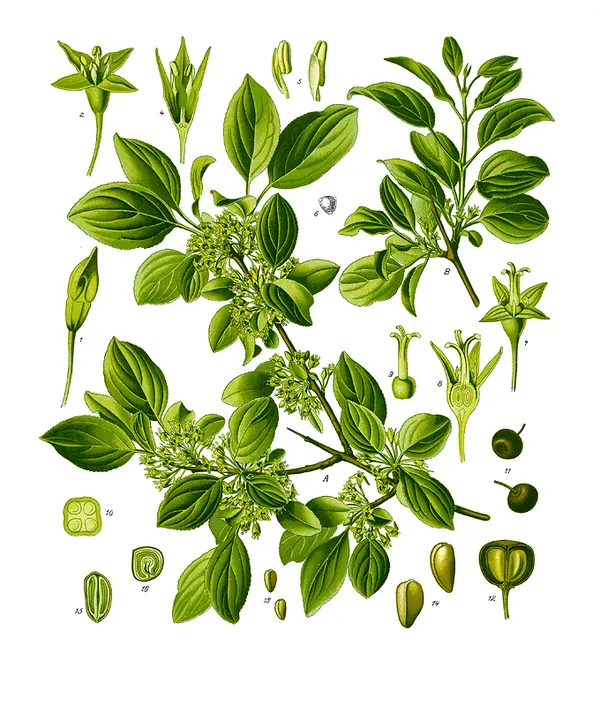
Common buckthorn
Rhamnus cathartica
Other names: purging buckthorn, European buckthorn, Rhamni cathartici fructus
Photo credit: Franz Eugen Köhler / Wikimedia Commons
This plant carries serious safety risks. All information is for educational reference only.
Safety information
Toxicity: Significant. Fresh/unripe berries and overuse cause violent purging, painful cramps, watery diarrhoea, vomiting, and fluid/electrolyte (especially potassium) loss. Prolonged use (>~1-2 weeks) can cause potassium depletion, colonic dysfunction, and laxative dependence.
Contraindications: Intestinal obstruction or stenosis, appendicitis, acute inflammatory bowel disease (Crohn's, ulcerative colitis), undiagnosed abdominal pain, severe dehydration. Pregnancy and lactation - avoid (cathartics may be reflexively uterine-stimulant and pass to breast milk causing infant diarrhoea). Children - avoid.
Interactions: Potassium loss potentiates cardiac glycosides (digoxin) toxicity and interacts with other potassium-lowering drugs (thiazide/loop diuretics, corticosteroids, liquorice) and antiarrhythmics. Reduced GI transit time can lower absorption of other oral drugs.
Pregnancy & breastfeeding: avoid in pregnancy and lactation
Evidence level
Reported in folk medicine sources; not clinically validated. Folk and historical sources have not been validated by clinical research.
Preparations
This plant carries serious safety risks. All information is for educational reference only.
traditional preparation · berries
Part used: berries
Traditional use: constipation (purgative)(Folk and historical sources have not been validated by clinical research.)
Proposed mechanism: anthraquinone glycosides (emodin and related) stimulate colonic motility
Associated conditions
Nutritional notes
not a food
Healing traditions
Related plants
Sources (2)
- Rhamnus cathartica - Wikipedia (chemistry & toxicity overview)
- WebMD - European Buckthorn