
This plant carries serious safety risks. All information is for educational reference only.
Safety information
Toxicity: Sweet almond safe. BITTER almond contains amygdalin → hydrogen cyanide; bitter-almond and its oil/nitrile are toxic. FLAG — the text explicitly uses bitter almond (მწარისა ზეთი).
Contraindications: Never give bitter almond to children (the texts do — do NOT follow).
Interactions: None documented.
Evidence level
Found in historical texts; limited or no modern study. Folk and historical sources have not been validated by clinical research.
Preparations
This plant carries serious safety risks. All information is for educational reference only.
almond oil / kernel mixture · kernel/oil
Part used: kernel/oil
Traditional use: anti-emetic (phlegm of the heart), laxative/aperient base, paediatric soothing, hangover(Folk and historical sources have not been validated by clinical research.)
Associated conditions
Edibility
Edible parts: Sweet almond YES (raw/roasted); bitter almond NOT edible.
Toxic lookalike warning
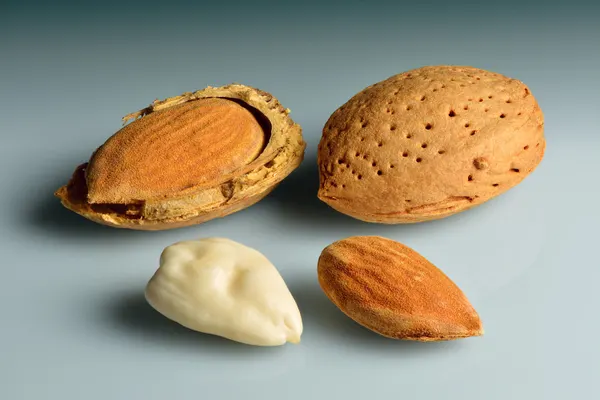
Bitter vs sweet almonds look near-identical — a genuine hazard.
Healing traditions
Related plants
Sources (2)
- Mtsire Karabadini, Part II (Surmanidze, 1990) — Ramaz Surmanidze (1990)
- Karabadini (Khelaia ed., 2009) — Nani Khelaia (ed.) (2009)