
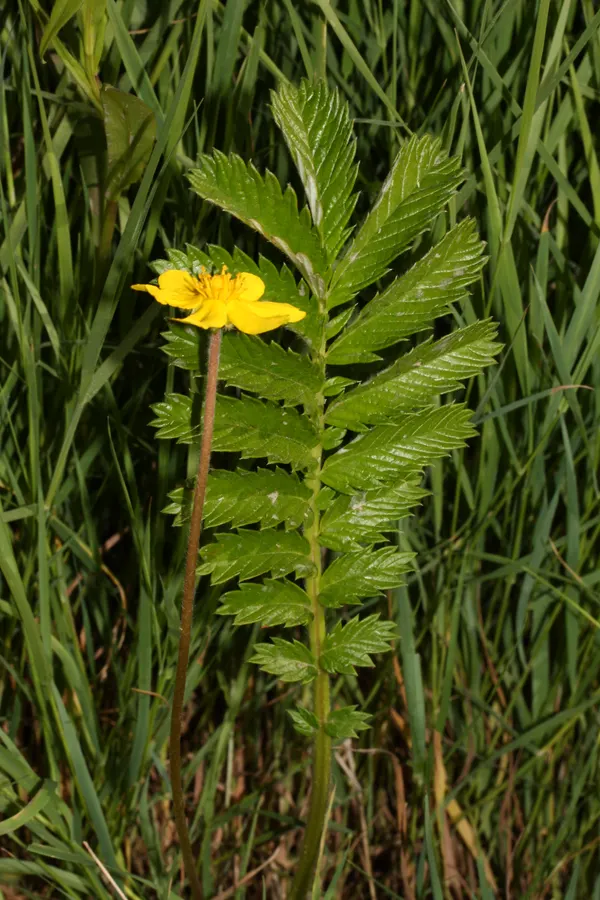
Silverweed
Potentilla anserina
Other names: Goose grass (folk), cinquefoil, Anserinae herba, Potentillae anserinae herba, Gänsefingerkraut
Edible plantPhoto credit: Walter Siegmund / Wikimedia Commons
Safety information
Safety information
Toxicity: Low at traditional doses; tannin-rich (GI upset/reduced mineral absorption if excessive). Limited safety data.
Contraindications: Pregnancy/lactation (uterine/antispasmodic reputation; insufficient data — avoid medicinal doses); iron-deficiency anaemia (tannins); known hypersensitivity.
Interactions: Tannins may reduce absorption of iron and some drugs taken concurrently — separate dosing; theoretical additive astringent/antidiarrhoeal effect.
Pregnancy & breastfeeding: Avoid medicinal doses (uterine/antispasmodic reputation; insufficient data).
Evidence level
Documented in systematic traditional medicine literature.
Preparations
infusion · aerial parts
Part used: aerial parts
Traditional use: astringent/antispasmodic for mild dysmenorrhoea and diarrhoea; gargle for mouth/throat inflammation
Proposed mechanism: tannins (Rosaceae astringent)
Associated conditions
Edibility
Edible parts: roots edible cooked (folk famine food, starchy) and young leaves occasionally used
Toxic lookalike warning
Foliage resembles other Potentilla/cinquefoils and (superficially) some Rosaceae — not deadly, but verify the silvery-undersided pinnate leaves before eating roots; avoid confusion with unrelated rosette plants
Nutritional notes
Roots provide starch (historic famine food); herb is tannin/flavonoid-rich, not a staple
Healing traditions
Related plants
Sources (3)
- Phenolic Profile of Potentilla anserina L. (Rosaceae) Herb … RP-HPLC-UV (PMC)
- Potentillae anserinae herba — Altmeyers Encyclopedia, Phytotherapy (EN, transl. from DE)
- Silverweed — medicinal use of the drug — Arzneipflanzenlexikon (EN)
Sourcing & resources
Affiliate links — we may earn a small commission at no extra cost to you.