
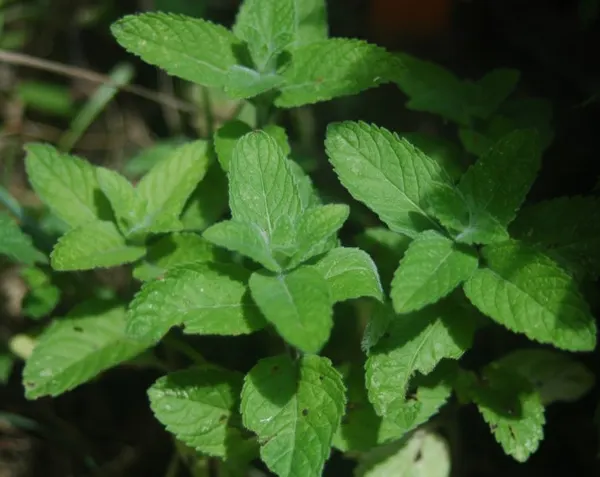
Bo he / Chinese mint
Mentha haplocalyx
Other names: 薄荷 bòhé, Bo he / Chinese mint
Edible plantPhoto credit: Doronenko
Safety information
Safety information
Toxicity: Low for culinary/tea amounts. Concentrated menthol/peppermint oil can cause heartburn; in infants menthol should not be applied near face/nose (risk of laryngospasm/apnea).
Contraindications: GERD/hiatus hernia (oil may worsen reflux); infants and young children (menthol facial application); pregnancy at high oil doses not well characterized.
Interactions: Concentrated peppermint oil may affect drug metabolism (CYP) in theory; otherwise culinary use low-risk.
Pregnancy & breastfeeding: High oil doses not well characterized.
Evidence level
Supported by clinical trials in humans.
Preparations
infusion · aerial parts
Part used: aerial parts
Traditional use: disperses wind-heat, clears head and eyes, soothes throat, courses the liver (early colds, sore throat, headache)
Proposed mechanism: volatile oil (menthol, menthone), rosmarinic acid
edible · leaf
Part used: leaf
Traditional use: culinary herb and tea(Folk and historical sources have not been validated by clinical research.)
essential oil · aerial parts
Part used: aerial parts
Traditional use: IBS (peppermint oil, related Mentha)
Proposed mechanism: menthol
Associated conditions
Edibility
Edible parts: Leaves used as culinary herb and tea.
Toxic lookalike warning
Mints (Lamiaceae, square stems, opposite leaves) can be confused with some non-mint plants; identify by aroma and morphology, use only food-grade mint.
Nutritional notes
Functional culinary herb; volatile oil (menthol, menthone), rosmarinic acid; negligible macronutrient at culinary amounts.
Healing traditions
Related plants
Sources (2)
- Mentha canadensis / haplocalyx (Wikipedia), English, accessed 2026, https://en.wikipedia.org/wiki/Mentha_canadensis
- Peppermint Oil (NCCIH/NIH), English, https://www.nccih.nih.gov/health/peppermint-oil
Sourcing & resources
Affiliate links — we may earn a small commission at no extra cost to you.