
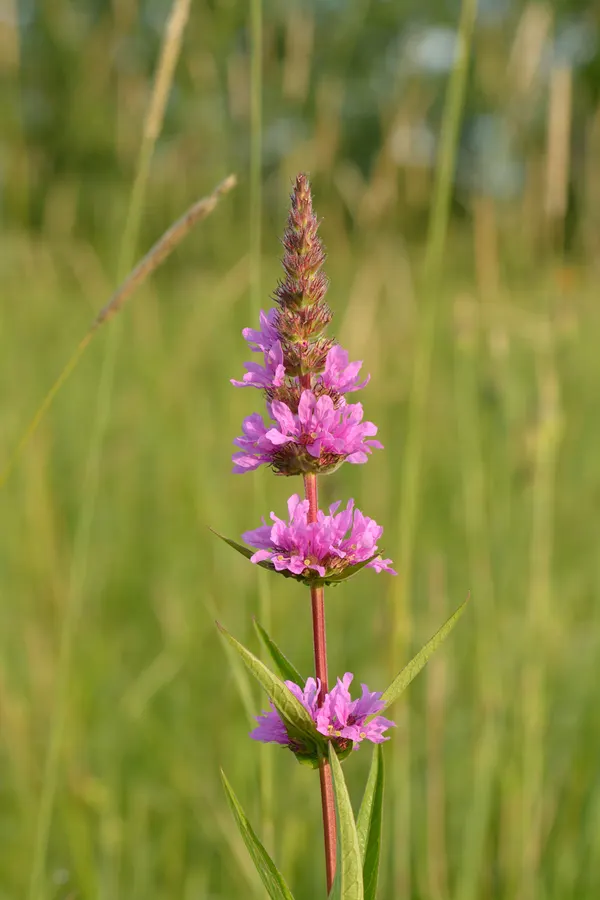
Purple loosestrife
Lythrum salicaria
Other names: Spiked loosestrife, Lythri herba, salicaire
Photo credit: Ivar Leidus / Wikimedia Commons
Safety information
Safety information
Toxicity: Low at traditional doses; tannin-rich (GI upset/reduced mineral absorption if excessive). In-vivo toxicity studies of extracts report a favorable profile; data still limited.
Contraindications: Pregnancy/lactation (insufficient data); persistent/severe or bloody diarrhoea — seek medical care; iron-deficiency anaemia (tannins) — avoid heavy use.
Interactions: Tannins may reduce absorption of iron, alkaloids and some drugs taken concurrently — separate dosing; theoretical additive astringent effect with other antidiarrhoeal tannin herbs.
Pregnancy & breastfeeding: Insufficient data — avoid.
Evidence level
Reported in folk medicine sources; not clinically validated. Folk and historical sources have not been validated by clinical research.
Preparations
infusion · flowering aerial parts
Part used: flowering aerial parts
Traditional use: astringent antidiarrhoeal for acute nonspecific diarrhoea(Folk and historical sources have not been validated by clinical research.)
Proposed mechanism: tannins, C-glycosides (vitexin, salicarin)
Dosage note (descriptive only): seek care if diarrhoea persistent/severe/bloody
Associated conditions
Nutritional notes
Not a food
Healing traditions
Related plants
Sources (3)
- Assessment of Purple Loosestrife (Lythrum salicaria L.) Extracts … Phenolic Profile, Antioxidant Activity, In Vivo Toxicity (PMC)
- Lythrum salicaria L.—Underestimated medicinal plant from European traditional medicine. A review (J. Ethnopharmacology, 2015)
- Purple loosestrife — drug monograph — Arzneipflanzenlexikon (EN, transl. from DE)
Sourcing & resources
Affiliate links — we may earn a small commission at no extra cost to you.