
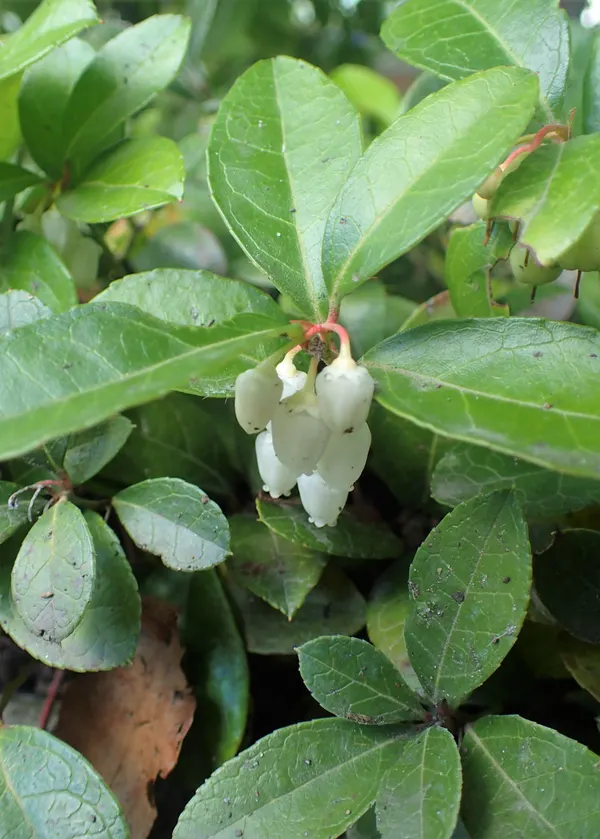
Eastern teaberry (wintergreen)
Gaultheria procumbens
Edible plantPhoto credit: Krzysztof Ziarnek, Kenraiz
Safety information
Safety information
Toxicity: Leaf tea/berries low risk; the concentrated essential oil is dangerous — methyl salicylate is highly toxic and skin-absorbed (a teaspoon of oil ~= ~21 adult aspirins); pediatric ingestions can be fatal.
Contraindications: Salicylate/aspirin sensitivity; children (oil); anticoagulant use; pregnancy (salicylate).
Interactions: Additive with aspirin/NSAIDs and anticoagulants (warfarin).
Pregnancy & breastfeeding: Pregnancy: salicylate — caution.
Evidence level
Supported by laboratory or animal studies; not yet confirmed in humans.
Preparations
fruit eaten · berry
Part used: berry
leaf infusion ('mountain/teaberry tea') · leaf
Part used: leaf
Traditional use: aches/pains, headaches, fevers, rheumatism, respiratory complaints; berries and leaves chewed as flavor/refresher
Proposed mechanism: methyl salicylate (aspirin-like) in oil/leaf; anti-inflammatory non-volatiles also active
Dosage note (descriptive only): essential oil NOT for casual use
Associated conditions
Edibility
Edible parts: Ripe red berries (mild, wintergreen-flavored, eaten raw) and leaves as tea. The essential oil is NOT food.
Toxic lookalike warning
Distinctive low evergreen; no dangerous edible lookalike at berry/leaf level.
Nutritional notes
Berries low-calorie; minor vitamin C.
Healing traditions
Related plants
Sources (3)
- ACEP Now toxicology (oil of wintergreen)
- Wikipedia
- PMC10778675 (phytochem/ethnobotany review)
Sourcing & resources
Affiliate links — we may earn a small commission at no extra cost to you.