
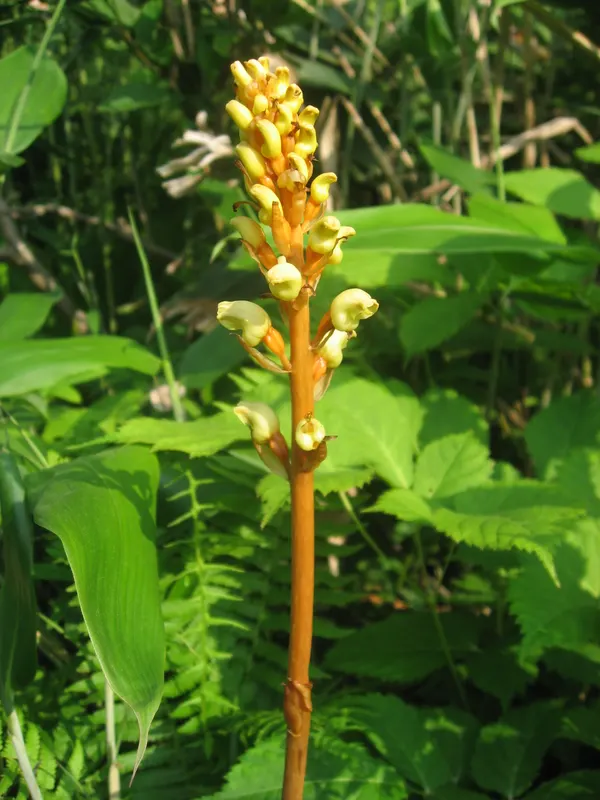
Tian ma / gastrodia
Gastrodia elata
Other names: 天麻 tiānmá, Tian ma / gastrodia
Edible plantPhoto credit: Qwert1234 (Wikimedia Commons)
Safety information
Safety information
Toxicity: Generally low-toxicity at traditional doses; some reports of dizziness, GI upset, or allergic reaction; comprehensive human safety data limited.
Contraindications: Pregnancy/clinical data limited.
Interactions: Theoretical additive sedation with CNS depressants; not well characterized.
Pregnancy & breastfeeding: Data limited.
Evidence level
Supported by laboratory or animal studies; not yet confirmed in humans.
Preparations
edible · tuber
Part used: tuber
Traditional use: tonic soups (simmered with fish head)(Folk and historical sources have not been validated by clinical research.)
powder · tuber
Part used: tuber
decoction · tuber/rhizome
Part used: tuber/rhizome
Traditional use: extinguishing wind, calming internal wind (headache, dizziness/vertigo, tremor/convulsion)
Proposed mechanism: gastrodin, p-hydroxybenzyl compounds
Associated conditions
Edibility
Edible parts: Tuber used as food-medicine in tonic soups (simmered with fish head) in parts of China at traditional amounts.
Toxic lookalike warning
Gastrodia is a protected/cultivated orchid tuber; never substitute unidentified foraged tubers; largely cultivated (wild collection restricted).
Nutritional notes
Functional-food tuber; gastrodin/polysaccharides; modest nutrient value.
Healing traditions
Related plants
- Jatamansi (spikenard)Nardostachys jatamansiClinical
- Gokshura (puncture vine)Tribulus terrestrisClinical
- Nirgundi (five-leaved chaste tree)Vitex negundoClinical
- WillowSalix nigraClinical
- Sichuan lovage rhizome / chuanxiong (川芎)Ligusticum chuanxiongClinical
- Asian cornelian cherry / shan zhu yu (山茱萸)Cornus officinalisClinical
Sources (2)
- Gastrodia elata (Wikipedia), English, accessed 2026, https://en.wikipedia.org/wiki/Gastrodia_elata
- Gastrodia - Memorial Sloan Kettering About Herbs, English, https://www.mskcc.org/cancer-care/integrative-medicine/herbs/gastrodia
Sourcing & resources
Affiliate links — we may earn a small commission at no extra cost to you.