
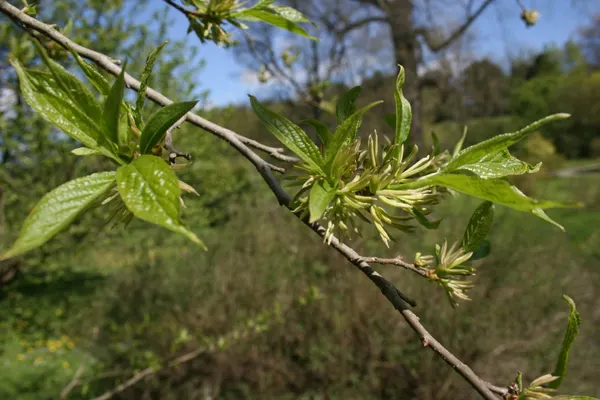
Du zhong / hardy rubber tree
Eucommia ulmoides
Other names: 杜仲 dùzhòng; 杜仲叶, Du zhong / hardy rubber tree
Edible plantPhoto credit: Sten Porse
Safety information
Safety information
Toxicity: Generally low-toxicity in traditional use; comprehensive human safety data limited.
Contraindications: Pregnancy data limited (traditionally used to calm the fetus but not self-prescribe); caution combining with antihypertensive drugs.
Interactions: Theoretical additive effect with antihypertensive medications.
Pregnancy & breastfeeding: Data limited.
Evidence level
Supported by laboratory or animal studies; not yet confirmed in humans.
Preparations
decoction · bark
Part used: bark
Traditional use: tonifying liver and kidney, strengthening sinews and bones, supporting lower back/knees, calming the fetus, hypertension patterns
Proposed mechanism: lignans (pinoresinol diglucoside), iridoids (aucubin, geniposidic acid), chlorogenic acid
leaf tea · leaf
Part used: leaf
Traditional use: functional beverage(Folk and historical sources have not been validated by clinical research.)
powder/extract · bark
Part used: bark
Traditional use: antihypertensive/bone (lab/animal)
Associated conditions
Edibility
Edible parts: Leaf consumed as tea (functional beverage); bark is medicinal, not food.
Toxic lookalike warning
Bark/leaf contain a latex (gutta-percha) that strings when broken - a useful ID feature; use authenticated Eucommia material only.
Nutritional notes
Leaf tea provides chlorogenic acid and flavonoids; not a significant nutrient source.
Healing traditions
Related plants
Sources (2)
- Eucommia ulmoides (Wikipedia), English, accessed 2026, https://en.wikipedia.org/wiki/Eucommia_ulmoides
- Eucommia / Du Zhong - Drugs.com natural database, English, https://www.drugs.com/npp/eucommia.html
Sourcing & resources
Affiliate links — we may earn a small commission at no extra cost to you.