
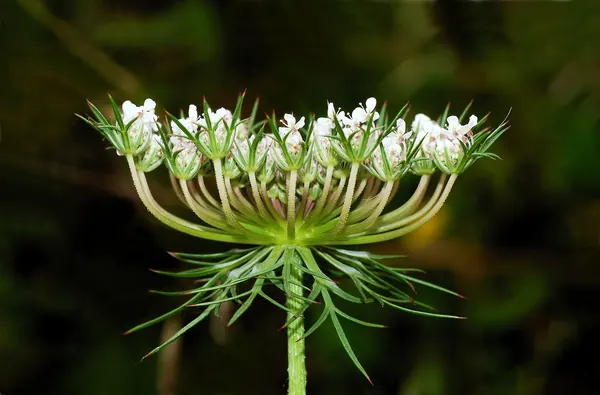
Safety information
Safety information
Toxicity: Juice of the fresh plant may cause photosensitivity. | None known at food amounts.
Contraindications: None specifically reported. | None known at food amounts.
Interactions: None reported. | None significant.
Evidence level
Documented in systematic traditional medicine literature.
Preparations
infusion · aerial parts and seed
Part used: aerial parts and seed
Traditional use: Traditionally used as a urinary antiseptic and antilithic for cystitis, prostatitis and kidney stones, as a diuretic for gout and rheumatism, and the seeds as a carminative for flatulence and colic.
How to prepare (traditional): Infusion of aerial parts: pour 1 cup of boiling water over 1 teaspoon of dried herb and infuse 10-15 minutes. Seed infusion: use a quarter to 1 teaspoon of seeds per cup.
Dosage note (descriptive only): Drunk three times a day.
tincture · aerial parts
Part used: aerial parts
Traditional use: Diuretic / antilithic.
How to prepare (traditional): Tincture at 1:5 in 25% alcohol.
Dosage note (descriptive only): 1-2 ml three times a day.
Associated conditions
Edibility
Edible parts: root of cultivated form is the food carrot; wild taproot edible when young | Root, raw or cooked (common food). Source refers to cultivated carrot.
Toxic lookalike warning
Closely resembles poison hemlock (Conium maculatum) and water hemlock (Cicuta), which are deadly — never forage without expert positive identification. | Toxic-lookalike warning for wild Daucus/umbellifers: wild carrot can be confused with poison hemlock (Conium maculatum) and Caucasian giant hogweed (Heracleum); never gather wild umbellifer roots without expert ID.
Nutritional notes
Carotene-rich root (cultivated form). | Beta-carotene (provitamin A), fiber, potassium (functional food).
Healing traditions
Related plants
Sources (2)
- Hoffmann D., Medical Herbalism (2003) — David Hoffmann (2003)
- Masalebi Saqartvelos Etnografiisatvis, 2020, N1 (2020)
Sourcing & resources
Affiliate links — we may earn a small commission at no extra cost to you.