
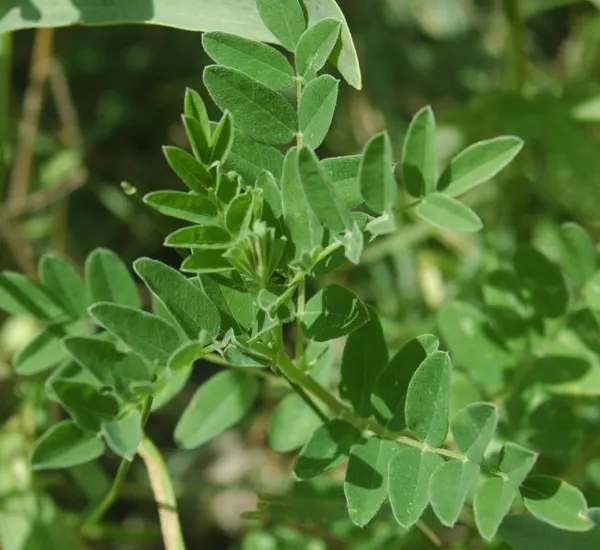
Astragalus / Mongolian milkvetch
Astragalus mongholicus
Other names: 黄芪 / 黃芪 huángqí; běiqí, Astragalus / Mongolian milkvetch
Edible plantPhoto credit: Doronenko (Wikimedia Commons)
Safety information
Safety information
Toxicity: Generally low-toxicity. Toxic constituents (indolizidine alkaloids, nitro compounds, selenium) of some other Astragalus species not detected in A. mongholicus used in supplements/TCM.
Contraindications: Data limited; caution in pregnancy and in autoimmune disease / immunosuppressant use (immunostimulant theory).
Interactions: Possible interaction with immunosuppressants; theoretical interaction with anticoagulants.
Pregnancy & breastfeeding: Caution; data limited.
Evidence level
Supported by laboratory or animal studies; not yet confirmed in humans.
Preparations
decoction · root
Part used: root
Traditional use: qi-tonifying; immune/exterior defense (wei qi), spleen and lung support
Proposed mechanism: polysaccharides, astragalosides, isoflavones, cycloastragenol
extract · root
Part used: root
Traditional use: immunomodulatory; allergic rhinitis (limited evidence)
Associated conditions
Edibility
Edible parts: Root used in soups/broths as food-medicine (simmered then removed).
Toxic lookalike warning
Several other Astragalus (locoweed) species are seriously poisonous to livestock; only correctly identified A. mongholicus / pharmacopoeial material should be used; never substitute foraged Astragalus.
Nutritional notes
Functional-food role in tonic broths; polysaccharides, astragalosides (triterpenoid saponins), isoflavones (calycosin, formononetin), cycloastragenol.
Healing traditions
Related plants
Sources (3)
- Astragalus mongholicus (Wikipedia), English, accessed 2026, https://en.wikipedia.org/wiki/Astragalus_propinquus
- Block & Mead, Immune System Effects of Echinacea, Ginseng, and Astragalus: A Review, Integr Cancer Ther 2003, PMID 15035888
- Rios & Waterman, A review of the pharmacology and toxicology of Astragalus, Phytother Res 1997
Sourcing & resources
Affiliate links — we may earn a small commission at no extra cost to you.