
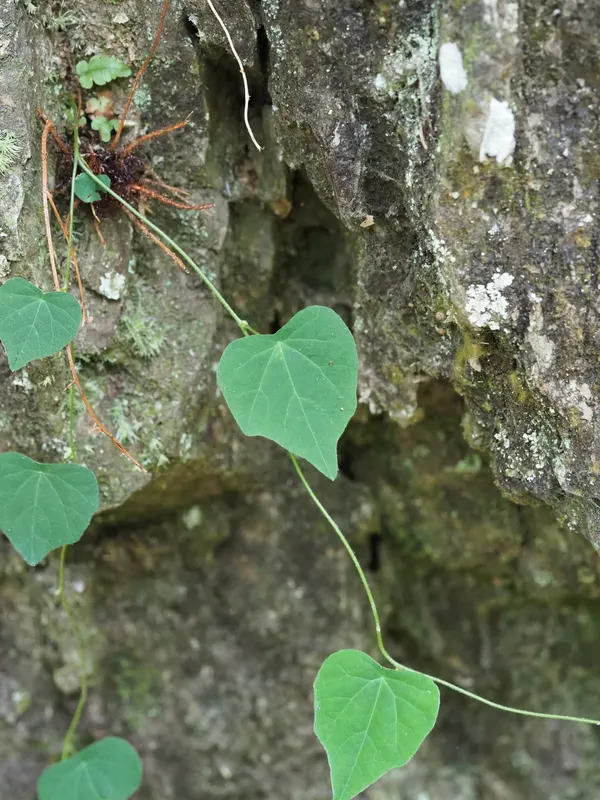
This plant carries serious safety risks. All information is for educational reference only.
Safety information
Toxicity: S. tetrandra itself comparatively safe diuretic/analgesic, BUT the name 'fang ji' catastrophically confused with nephrotoxic Aristolochia fangchi (guang fang ji) — substitution caused 'Chinese-herb nephropathy' outbreak (renal fibrosis + urothelial carcinoma). High-dose tetrandrine also has pulmonary/hepatic toxicity signals.
Contraindications: Pregnancy; renal impairment; only use verified Stephania, never Aristolochia-derived guang fang ji.
Interactions: Tetrandrine is a P-gp/Ca-channel modulator -> interaction potential; additive hypotensive effect.
Pregnancy & breastfeeding: Avoid in pregnancy.
Evidence level
Supported by laboratory or animal studies; not yet confirmed in humans.
Preparations
This plant carries serious safety risks. All information is for educational reference only.
decoction · root
Part used: root
Traditional use: expels wind-damp, relieves pain, promotes urination/reduces edema; wind-damp joint pain, edema, hypertension (folk)
Proposed mechanism: bisbenzylisoquinoline alkaloids (tetrandrine, fangchinoline) — Ca-channel blockade, antihypertensive, anti-fibrotic, anti-inflammatory, antitumor
Dosage note (descriptive only): sourcing-sensitive
Reference only — not a dosage instruction
Associated conditions
Nutritional notes
n/a
Healing traditions
Related plants
Sources (2)
- [E37] Stephania tetrandra vs nephrotoxic Aristolochia fangchi differentiation study
- [E38] Aristolochia fangchi nephropathy/urothelial carcinoma clinical report (Nortier/Vanherweghem lineage)