
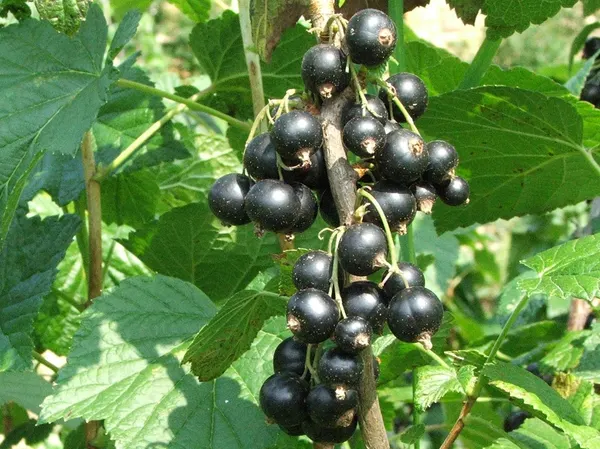
Blackcurrant
Ribes nigrum
Other names: cassis, black currant, shavi motskhari (Geo.)
Edible plantPhoto credit: Jerzy Opioła / Wikimedia Commons
Safety information
Safety information
Toxicity: leaf: low/none known at traditional doses. Berry: food-safe.
Contraindications: leaf - conditions where increased fluid intake/diuresis is unwanted (e.g. significant cardiac/renal impairment) without medical advice; pregnancy/breastfeeding (leaf data limited). Berry: none notable.
Interactions: leaf may add to diuretic effects (electrolyte caution); seed-oil GLA theoretical additive with antiplatelets/anticoagulants; otherwise limited.
Pregnancy & breastfeeding: leaf data limited in pregnancy/breastfeeding
Evidence level
Documented in systematic traditional medicine literature.
Preparations
infusion · leaf
Part used: leaf
Traditional use: increase urine for minor urinary complaints, adjuvant in rheumatic conditions
Proposed mechanism: proanthocyanidins - diuretic/anti-inflammatory
food · fruit
Part used: fruit
Traditional use: vitamin-C-rich nutritive/cold remedy(Folk and historical sources have not been validated by clinical research.)
Proposed mechanism: vitamin C, anthocyanins
Associated conditions
Edibility
Edible parts: berries (raw or cooked), juice, and young leaves (tea) are edible/food; berries very high in vitamin C and anthocyanins
Toxic lookalike warning
no notable toxic lookalike for cultivated Ribes nigrum; confirm correct Ribes species when foraging
Nutritional notes
nutrient-dense berry - very high vitamin C, anthocyanins/polyphenols, vitamin K, potassium, manganese, fiber; seed oil supplies gamma-linolenic acid (GLA)
Healing traditions
Related plants
Sources (3)
- EMA assessment report on Ribes nigrum L., folium (EMA/HMPC)
- EMA: Ribis nigri folium (EMA/HMPC)
- Ribes spp. (currant) knowledge review (MDPI Plants, 2025)
Sourcing & resources
Affiliate links — we may earn a small commission at no extra cost to you.