
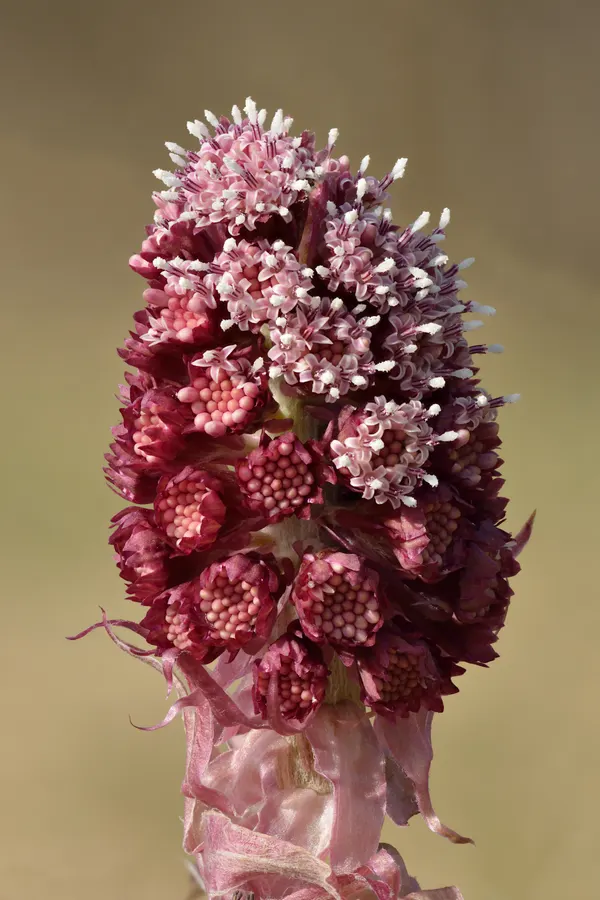
Butterbur
Petasites hybridus
Other names: bog rhubarb, pestwurz
Photo credit: Ivar Leidus / Wikimedia Commons
This plant carries serious safety risks. All information is for educational reference only.
Safety information
Toxicity: serious if not PA-free - unprocessed butterbur contains hepatotoxic, mutagenic, carcinogenic pyrrolizidine alkaloids (veno-occlusive liver disease). PA-free extracts: mild GI/burping, headache; post-market liver-injury reports prompted caution.
Contraindications: any liver disease; pregnancy and breastfeeding (absolute - PA risk); children (caution); Asteraceae allergy.
Interactions: additive hepatotoxicity with other hepatotoxins/alcohol; possible CYP interactions; caution with anticholinergics/other migraine drugs.
Pregnancy & breastfeeding: absolute contraindication in pregnancy and breastfeeding (PA risk)
Evidence level
Supported by clinical trials in humans.
Preparations
This plant carries serious safety risks. All information is for educational reference only.
standardized pharmaceutical extract · root
Part used: root
Traditional use: migraine prophylaxis, allergic rhinitis
Proposed mechanism: petasin/isopetasin sesquiterpenes
Associated conditions
Healing traditions
Related plants
Sources (3)
- Butterbur - StatPearls (NBK537160, NIH/NCBI)
- Petasites for migraine - pharmacology & safety review (PMC9108977)
- Safety profile of butterbur extract with emphasis on liver (Diener et al., 2018)