
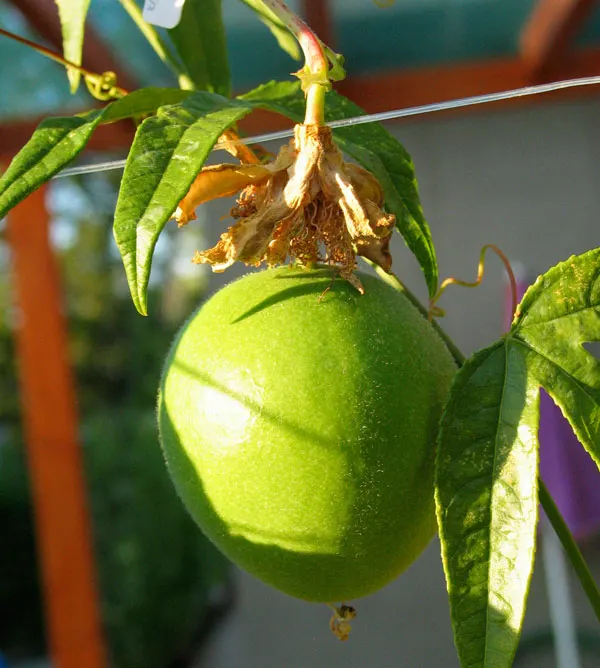
Passionflower
Passiflora incarnata
Other names: Passionflower
Photo credit: H3ini
Safety information
Safety information
Toxicity: None known reported.
Contraindications: Theoretically contraindicated for people taking MAO inhibitors.
Interactions: Potentiates the effects of sedative drugs; theoretical MAOI interaction (harman/harmaline alkaloids).
Evidence level
Supported by laboratory or animal studies; not yet confirmed in humans.
Preparations
infusion · leaf and whole plant
Part used: leaf and whole plant
Traditional use: Traditionally used as a sedative nervine for intransigent insomnia, anxiety and tension, to lower blood pressure and prevent tachycardia, and as an antispasmodic for nerve pain.
How to prepare (traditional): Infusion: pour 1 cup of boiling water over 1 teaspoon of dried herb and infuse 15 minutes.
Dosage note (descriptive only): A cup in the evening for sleeplessness, or 1 cup twice a day for other indications.
tincture · leaf and whole plant
Part used: leaf and whole plant
Traditional use: Hypnotic / nervine.
How to prepare (traditional): Tincture at 1:5 in 40% alcohol.
Dosage note (descriptive only): 1-4 ml, once in the evening for sleeplessness or twice a day for other conditions.
tincture · aerial parts
Part used: aerial parts
Traditional use: Traditional sedative for an overactive mind.
How to prepare (traditional): Tincture of the aerial parts, taken with water.
Dosage note (descriptive only): Take 1 tsp with water daily.
infusion · aerial parts
Part used: aerial parts
Traditional use: Traditionally for occasional sleeplessness and disturbed sleep.
How to prepare (traditional): Infusion of the aerial parts, drunk during the evening.
Dosage note (descriptive only): For occasional sleeplessness, drink up to about 300 ml during the evening.
other · aerial parts
Part used: aerial parts
Traditional use: Over-the-counter remedy for insomnia and stress.
How to prepare (traditional): Tablets, a common over-the-counter form.
Dosage note (descriptive only): As supplied.
Associated conditions
Healing traditions
Related plants
Sources (1)
- Hoffmann D., Medical Herbalism (2003) — David Hoffmann (2003)
Sourcing & resources
Affiliate links — we may earn a small commission at no extra cost to you.