
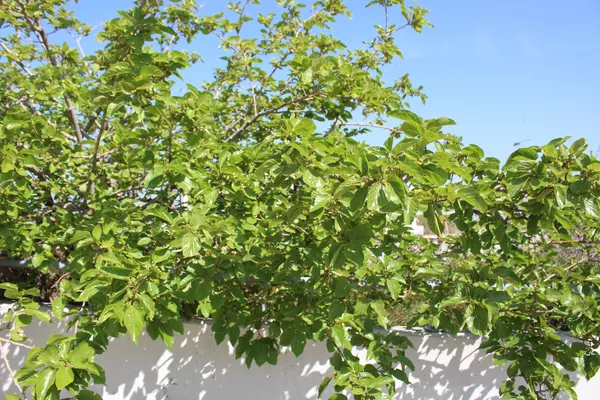
Sang ye / sang shen / white mulberry
Morus alba
Other names: 桑叶 / 桑葉 sāngyè; 桑椹 / 桑葚 sāngshèn; 桑白皮 sāngbáipí; 桑枝 sāngzhī, Sang ye / sang shen / white mulberry
Edible plantPhoto credit: Emőke Dénes
Safety information
Safety information
Toxicity: Low for the leaf tea and the fruit (a common food). Mulberry-leaf DNJ can blunt post-meal glucose - relevant to diabetics on medication. Unripe fruit and plant latex can cause GI upset.
Contraindications: Diabetics on glucose-lowering drugs (additive hypoglycemia risk with leaf preparations); pregnancy at medicinal doses not well characterized.
Interactions: Possible additive effect with antidiabetic drugs (leaf); not otherwise well characterized.
Pregnancy & breastfeeding: Medicinal doses not well characterized.
Evidence level
Supported by clinical trials in humans.
Preparations
infusion · leaf
Part used: leaf
Traditional use: dispersing wind-heat, clearing the lung, brightening eyes (modern blood-sugar interest)
Proposed mechanism: 1-deoxynojirimycin (DNJ, alpha-glucosidase inhibitor), flavonoids
edible fruit · fruit
Part used: fruit
Traditional use: nourishing blood and yin, moistening(Folk and historical sources have not been validated by clinical research.)
decoction · root bark (sangbaipi)
Part used: root bark (sangbaipi)
Traditional use: draining lung heat, reducing edema
Associated conditions
Edibility
Edible parts: Ripe fruit eaten fresh/dried (sweet); young leaves edible cooked and used as tea (also silkworm food plant).
Toxic lookalike warning
Eat only ripe mulberries - unripe (white/green) fruit and the milky latex can cause stomach upset and mild stimulant/hallucinogenic effects in quantity; identify Morus and avoid confusion with other unrelated berries.
Nutritional notes
Functional food; mulberries provide vitamin C, iron, anthocyanins, resveratrol; leaves provide flavonoids and DNJ.
Healing traditions
Related plants
Sources (2)
- Morus alba (Wikipedia), English, accessed 2026, https://en.wikipedia.org/wiki/Morus_alba
- Mulberry / Morus - Drugs.com natural database, English, https://www.drugs.com/npp/mulberry.html
Sourcing & resources
Affiliate links — we may earn a small commission at no extra cost to you.