
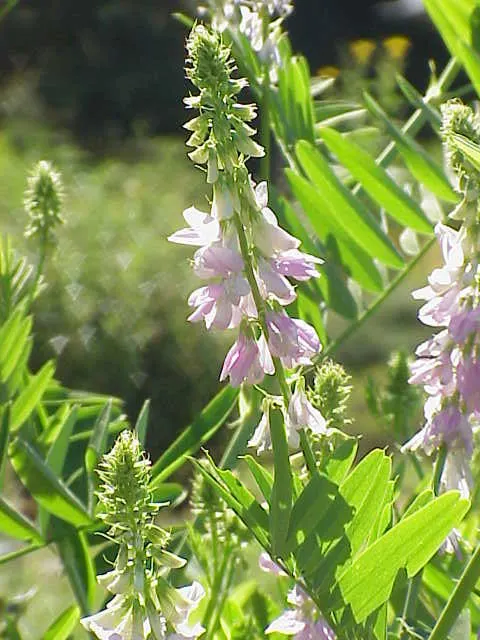
Goat's rue
Galega officinalis
Other names: French lilac, professor weed, Italian fitch, Galegae herba
Photo credit: Wikimedia Commons
This plant carries serious safety risks. All information is for educational reference only.
Safety information
Toxicity: Notable. Contains galegine and related guanidines; the fresh plant is toxic (livestock poisoning - pulmonary oedema, hypotension, death in grazing animals at high intake), so only properly dried material is used. Galegine can cause hypoglycaemia.
Contraindications: Diabetes / hypoglycaemia-prone individuals - risk of additive blood-sugar lowering. Pregnancy. Caution in lactation (limited infant-safety data). Hypotension. Avoid fresh plant entirely.
Interactions: Antidiabetic drugs (insulin, sulfonylureas, metformin, etc.) - additive hypoglycaemia risk; other glucose-lowering herbs likewise. Possible additive hypotension.
Pregnancy & breastfeeding: contraindicated in pregnancy; caution in lactation (limited infant-safety data)
Evidence level
Reported in folk medicine sources; not clinically validated. Folk and historical sources have not been validated by clinical research.
Preparations
This plant carries serious safety risks. All information is for educational reference only.
traditional preparation · aerial parts (dried only)
Part used: aerial parts (dried only)
Traditional use: galactagogue, antidiabetic folk use(Folk and historical sources have not been validated by clinical research.)
Proposed mechanism: galegine and related guanidines (chemical lead for metformin)
Associated conditions
Nutritional notes
not a food
Healing traditions
Related plants
Sources (2)
- Goat's Rue - Drugs and Lactation Database (LactMed), NCBI
- Goat's rue: Benefits, Side Effects & Research - Herbal Reality