
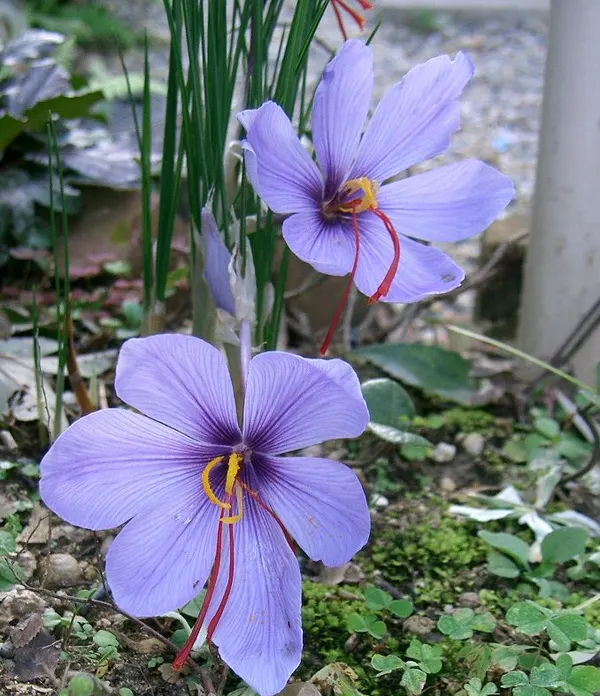
This plant carries serious safety risks. All information is for educational reference only.
Safety information
Toxicity: Use with care — toxic at high doses. | Low at culinary/medicinal doses (mg). High doses are toxic: grams can cause vomiting, bleeding and danger; saffron is also a traditional abortifacient/emmenagogue at high doses.
Contraindications: Avoid medicinal doses in pregnancy. | Pregnancy — avoid medicinal/high doses (uterine-stimulant / abortifacient at dose). Bleeding disorders; bipolar (mood effects).
Interactions: Caution with antidepressants (additive serotonergic — consult). | Possible additive effects with antidepressants, antihypertensives, and anticoagulant/antiplatelet drugs (clinical/preclinical signals).
Pregnancy & breastfeeding: Avoid medicinal doses in pregnancy. | Avoid medicinal/high doses — uterine-stimulant/abortifacient at dose.
Evidence level
Supported by clinical trials in humans.
Preparations
This plant carries serious safety risks. All information is for educational reference only.
other · flower
Part used: flower
Traditional use: Traditionally taken for low mood.
How to prepare (traditional): Dried stigma (the three deep orange-red threads from the flower) taken directly.
Dosage note (descriptive only): professional use only — not provided
Reference only — not a dosage instruction
powder · flower
Part used: flower
Traditional use: Traditionally taken for menstrual cramps.
How to prepare (traditional): Capsules made from the stigma.
Dosage note (descriptive only): professional use only — not provided
Reference only — not a dosage instruction
Associated conditions
Edibility
Edible parts: culinary spice (paella, rice dishes) | Culinary spice (stigmas) in tiny amounts.
Toxic lookalike warning
Frequently adulterated; buy reputable stigmas. | Powdered saffron is widely adulterated; cheaper 'safflower' (Carthamus tinctorius) and Crocus-lookalike autumn crocus (Colchicum autumnale, highly toxic — colchicine) can be confused with true saffron/crocus. Never substitute or wild-gather 'crocus' — Colchicum is deadly.
Nutritional notes
Used in tiny amounts; carotenoid pigments. | Used in trace amounts; not a nutritional source. Bioactives: crocins, crocetin, picrocrocin, safranal.
Healing traditions
Related plants
Sources (3)
- Chevallier A., Encyclopedia of Herbal Medicine (2016) — Andrew Chevallier (2016)
- Naraki et al. 2025, Iran J Basic Med Sci (PMID 40584445)
- Garang et al. 2025, Front Pharmacol (PMID 40963683)