
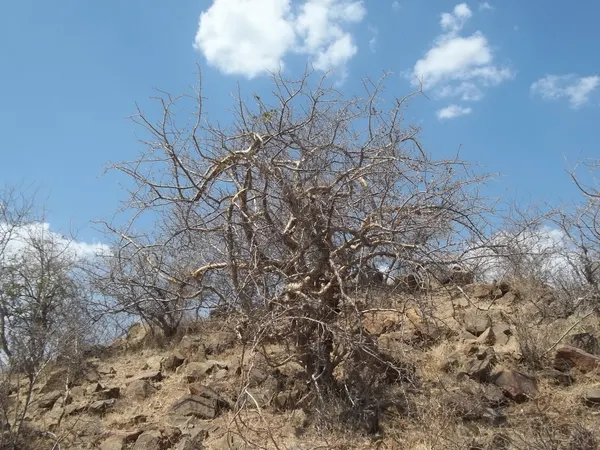
Guggul
Commiphora wightii
Other names: Guggulu (गुग्गुलु), Indian bdellium, mukul myrrh, Guggul
Photo credit: Geethaka99 (Wikimedia Commons)
Safety information
Safety information
Toxicity: Mild-moderate; GI upset, headache, skin rash/hypersensitivity reactions reported; rare.
Contraindications: Pregnancy (uterine stimulant — avoid); hyperthyroidism; before surgery (possible bleeding); liver disease.
Interactions: Reduces plasma levels of some drugs (propranolol, diltiazem — via CYP/P-gp induction); thyroid medication; anticoagulants; estrogen/contraceptives (reduced levels possible).
Pregnancy & breastfeeding: Avoid — uterine stimulant.
Evidence level
Supported by laboratory or animal studies; not yet confirmed in humans.
Preparations
standardized extract (guggulsterones) · oleo-gum-resin
Part used: oleo-gum-resin
Traditional use: lipid-lowering, anti-obesity, anti-arthritic, thyroid-stimulating
Proposed mechanism: E/Z-guggulsterones antagonize bile-acid nuclear receptor FXR and modulate cholesterol metabolism; NF-κB inhibition; induce CYP/P-gp
Dosage note (descriptive only): Lipid trials ~25 mg guggulsterones 2-3x daily; results inconsistent
Associated conditions
Nutritional notes
N/A; bioactives are E/Z-guggulsterones.
Healing traditions
Related plants
Sources (4)
- Ulbricht 2005, Complement Ther Med (PMID 16338199)
- Urizar 2003, Annu Rev Nutr (PMID 12626688)
- Shah 2012, Phytother Res (PMID 22388973)
- Shishodia 2008, Anticancer Res (PMID 19189646)
Sourcing & resources
Affiliate links — we may earn a small commission at no extra cost to you.