
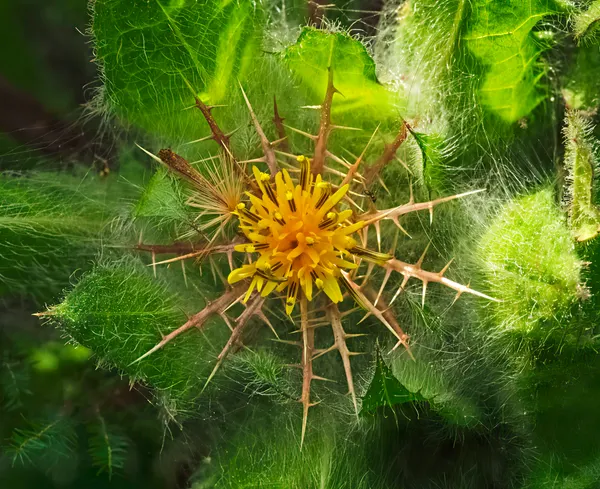
Blessed thistle
Cnicus benedictus
Other names: holy thistle, St. Benedict's thistle, spotted thistle, Centaurea benedicta
Photo credit: Didier Descouens / Wikimedia Commons
Safety information
Safety information
Toxicity: mild - high doses can cause nausea/vomiting/GI irritation; cnicin and related lactones are gastric irritants in excess.
Contraindications: pregnancy and breastfeeding (avoid - traditional emmenagogue/uterine reputation, insufficient safety data); known allergy to Asteraceae (Compositae); active GI ulcer/inflammation.
Interactions: may increase gastric acid (caution with antacids/PPIs intent, ulcer drugs); theoretical additive with other bitters; limited data.
Pregnancy & breastfeeding: avoid in pregnancy and breastfeeding (emmenagogue/uterine reputation)
Evidence level
Documented in systematic traditional medicine literature.
Preparations
infusion · aerial parts
Part used: aerial parts
Traditional use: loss of appetite, mild dyspepsia
Proposed mechanism: bitter sesquiterpene lactone cnicin
Associated conditions
Healing traditions
Related plants
Sources (3)
- Centaurea benedicta nutrients/bioactives review (PMC11677765)
- EMA: Cnici benedicti herba (EMA/HMPC)
- EU herbal monograph on Cnicus benedictus L., herba (EMA/HMPC, 2023)
Sourcing & resources
Affiliate links — we may earn a small commission at no extra cost to you.