
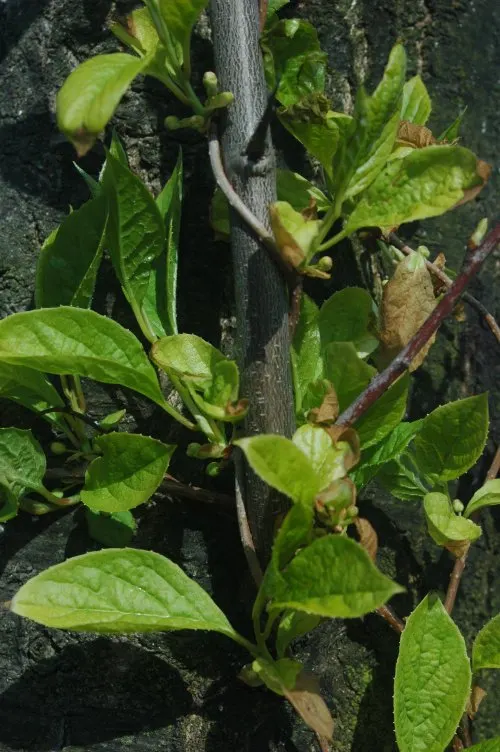
Schisandra / five-flavor berry
Schisandra chinensis
Other names: 五味子 wǔwèizǐ; 北五味子 běi wǔwèizǐ; omija, Schisandra / five-flavor berry
Edible plantPhoto credit: Doronenko
Safety information
Safety information
Toxicity: Generally low for normal food/tea amounts; comprehensive human safety data limited.
Contraindications: Pregnancy caution (traditional); data limited.
Interactions: Schisandra lignans can affect cytochrome P450 / drug-metabolizing enzymes; theoretical interaction with CYP3A-metabolized drugs.
Pregnancy & breastfeeding: Caution (traditional); data limited.
Evidence level
Supported by laboratory or animal studies; not yet confirmed in humans.
Preparations
decoction · seed
Part used: seed
Traditional use: Traditionally for coughs and shortness of breath.
How to prepare (traditional): Decoction of crushed berries (about 5 g crushed berries with about 100 ml water), divided into doses.
Dosage note (descriptive only): Divide into 3 doses and drink over a 24-hour period.
Associated conditions
Edibility
Edible parts: Berries eaten dried and made into Korean cordial omija-cha; crushed leaves (lemony) used as a vegetable.
Toxic lookalike warning
Harvest only from identified Schisandra vines; do not confuse with unrelated red-berried climbers.
Nutritional notes
Functional berry/tea; dibenzocyclooctadiene lignans (schisandrin, deoxyschizandrin, gomisins, pregomisin).
Healing traditions
Related plants
Sources (3)
- Schisandra chinensis (Wikipedia), English, accessed 2026, https://en.wikipedia.org/wiki/Schisandra_chinensis
- Szopa, Ekiert & Ekiert, Schisandra chinensis... a review on the bioactive components, pharmacological properties, Phytochem Rev 2017, PMC5378736
- WHO Monographs on Selected Medicinal Plants, Vol. 3
Sourcing & resources
Affiliate links — we may earn a small commission at no extra cost to you.