
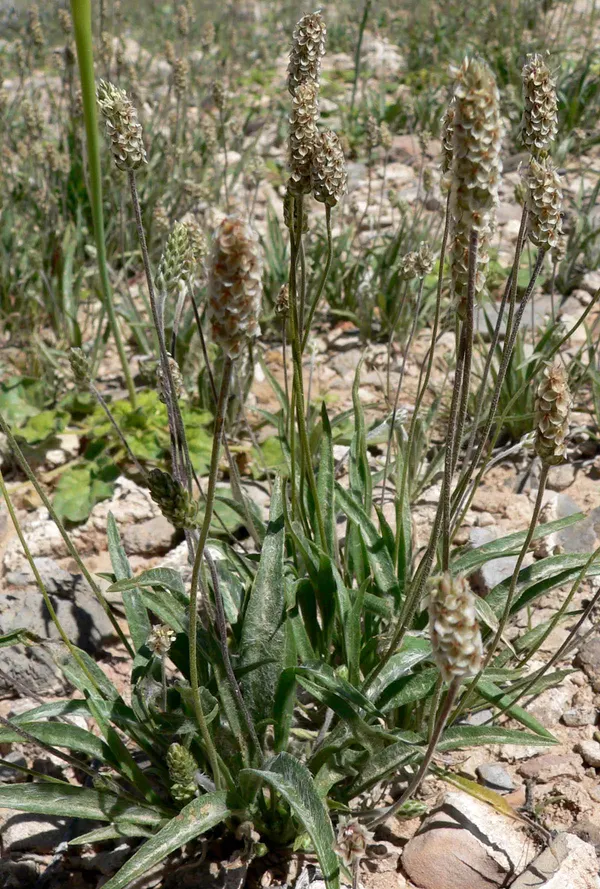
Psyllium / Ispaghula
Plantago ovata(?)
Other names: Psyllium / Ispaghula, Psyllium (Plantain seed)
Edible plantPhoto credit: Stan Shebs
Safety information
Safety information
Toxicity: Bloating/flatulence (usually transient); without adequate fluid, can cause oesophageal or bowel obstruction/choking. Rare allergic reactions (including occupational exposure to the powder). | Mild.
Contraindications: Difficulty swallowing or any oesophageal/throat narrowing; bowel obstruction/stenosis, ileus, faecal impaction; sudden unexplained change in bowel habit; undiagnosed rectal bleeding. Take with plenty of fluid; not immediately before lying down. | Always take with plenty of water; do not exceed the stated dose.
Interactions: May delay/reduce absorption of co-administered oral drugs (levothyroxine, lithium, carbamazepine, others) - separate dosing by >=30-60 minutes (other medicines 1 hour before or 2-4 hours after). May reduce insulin requirement in diabetes (monitor). | Take separately from medicines (fibre can slow drug absorption).
Pregnancy & breastfeeding: Not specifically addressed (bulk fibre generally considered low-risk).
Evidence level
Supported by clinical trials in humans.
Preparations
powdered-husk capsules · husks
Part used: husks
Traditional use: bowel regulation
husk poultice · husks
Part used: husks
Traditional use: topical(Folk and historical sources have not been validated by clinical research.)
husk/powder stirred into water or food (bulk laxative) / edible fibre supplement · seed husk
Part used: seed husk
Traditional use: habitual constipation, easy defecation with soft stool, adjunct in IBS, dietary soluble-fibre/cholesterol support
Proposed mechanism: highly hydrophilic arabinoxylan mucilage forms a gel increasing stool bulk/water content (bulk-forming laxative), slows GI transit, binds bile acids (lowers LDL via increased hepatic cholesterol-to-bile-acid conversion), blunts post-prandial glucose
Dosage note (descriptive only): EMA constipation use commonly ~a few grams of husk (one sachet/teaspoon) one to three times daily, each with a large glass of water/fluid; descriptive only
soaked seed (cold macerate) · seeds
Part used: seeds
Traditional use: bulk regulator — both constipation and diarrhoea, IBS, ulcerative colitis, Crohn's, haemorrhoids; absorbs gut toxins; acid indigestion
Proposed mechanism: soluble mucilage fibre; both laxative and anti-diarrhoeal
Dosage note (descriptive only): always take with plenty of water; do not exceed stated dose; take separately from medicines
Associated conditions
Edibility
Edible parts: husk/seed as a soluble-fibre food/supplement (commercial product; unmistakable) | seed/husk is a widely used dietary fibre supplement
Toxic lookalike warning
No toxic-lookalike concern for the commercial product.
Nutritional notes
Functional food - soluble fibre (cholesterol-lowering, glycaemic, prebiotic-adjacent); very low digestible calories. | Soluble mucilage fibre; functional food for bowel and metabolic health.
Healing traditions
Related plants
- Daruharidra (tree turmeric / Indian barberry)Berberis aristataClinical
- Musta (nutgrass)Cyperus rotundusClinical
- Khadira (black catechu / cutch tree)Acacia catechuClinical
- Kalgan / TormentilPotentilla erectaClinical
- Sangre de grado / Dragon's bloodCroton lechleriClinical
- Amur cork tree bark / huang bai (黄柏)Phellodendron amurenseClinical
Sources (4)
- Chevallier A., Encyclopedia of Herbal Medicine (2016) — Andrew Chevallier (2016)
- EMA/HMPC Plantaginis ovatae seminis tegumentum (ispaghula husk) monograph & public summary
- FDA soluble-fibre (psyllium) health-claim documentation
- MedlinePlus psyllium information
Sourcing & resources
Affiliate links — we may earn a small commission at no extra cost to you.