
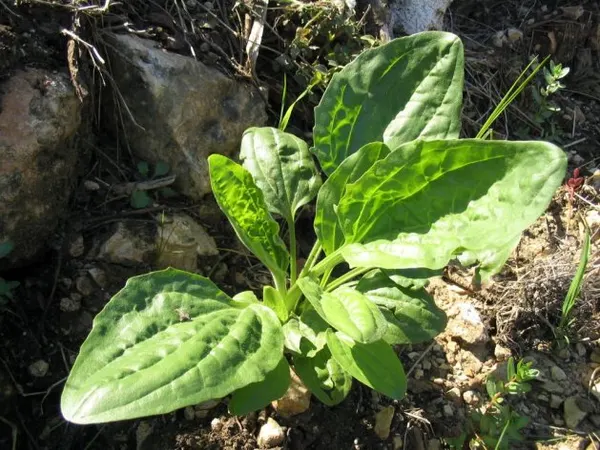
Ribwort plantain
Plantago(?)
Other names: Ribwort plantain, მრავალძარღვა (mravaldzargva, 'many-veined'), Plantain
Edible plantPhoto credit: Iorsh at English Wikipedia
Safety information
Safety information
Toxicity: Low. | Low (general knowledge). Generally well tolerated topically.
Contraindications: None well established; seeds (mucilaginous, psyllium-like) require adequate fluid. | (General knowledge) rare allergy.
Interactions: Mucilage/fibre may slow absorption of co-taken oral drugs - separate dosing. (Safety gate.) | None well established.
Pregnancy & breastfeeding: Not noted.
Evidence level
Reported in folk medicine sources; not clinically validated. Folk and historical sources have not been validated by clinical research.
Preparations
decoction/infusion · leaf
Part used: leaf
Traditional use: GI mixtures(Folk and historical sources have not been validated by clinical research.)
baked into rusks · leaf
Part used: leaf
Traditional use: childhood anemia(Folk and historical sources have not been validated by clinical research.)
warm topical application · leaves
Part used: leaves
Traditional use: boiled and applied warm to the inflamed finger for saç'ereli (panaritium/whitlow); also key ingredient (with wine vinegar) in a complex secret ointment for the same(Folk and historical sources have not been validated by clinical research.)
Proposed mechanism: Plantain leaf is a widely documented traditional wound/skin herb (mucilage, aucubin) — general knowledge
seeds · seed
Part used: seed
Traditional use: diarrhoea/bleeding(Folk and historical sources have not been validated by clinical research.)
Proposed mechanism: mucilage (psyllium-like)
Dosage note (descriptive only): 4-5 g
fresh juice · leaf
Part used: leaf
Traditional use: cough/expectorant, gastritis, gum disease, wounds, bleeding(Folk and historical sources have not been validated by clinical research.)
Dosage note (descriptive only): fresh plant boiled in chacha spirit, empty stomach
Associated conditions
Edibility
Edible parts: Young leaves edible (cooked, somewhat stringy); seeds are a psyllium-type fibre. | Young Plantago leaves are edible cooked (general knowledge).
Toxic lookalike warning
Basal plantain rosettes are distinctive (parallel veins, leafless flower spike) but inexperienced foragers should avoid confusing them with unrelated rosette weeds; confirm the parallel veins and ribbed spike. | Basal-rosette wild greens can be confused with toxic plants such as foxglove (Digitalis) rosettes and Caucasian hemlock (Conium/Heracleum); never harvest wild greens without certain identification.
Nutritional notes
Leaf provides vitamin C, A, K and minerals; seed is soluble fibre. | Leaves provide fiber, vitamins A/C, minerals (general).
Healing traditions
Related plants
- Daruharidra (tree turmeric / Indian barberry)Berberis aristataClinical
- Musta (nutgrass)Cyperus rotundusClinical
- Khadira (black catechu / cutch tree)Acacia catechuClinical
- Kalgan / TormentilPotentilla erectaClinical
- Sangre de grado / Dragon's bloodCroton lechleriClinical
- Amur cork tree bark / huang bai (黄柏)Phellodendron amurenseClinical
Sources (2)
- ნუნუ ღლიღვაშვილი-მარგიანი, "მედეადან დღემდე" (Nunu Ghlighvashvili-margiani, "From Medea to the present day")
- Masalebi Saqartvelos Etnografiisatvis, 2020, N1 (2020)
Sourcing & resources
Affiliate links — we may earn a small commission at no extra cost to you.