
Safety information
Safety information
Toxicity: Low at culinary/tea doses; concentrated essential oil (thymol) is irritant.
Contraindications: Pregnancy (avoid concentrated oil); thymol sensitivity.
Interactions: None well documented at tea dose.
Pregnancy & breastfeeding: Avoid concentrated oil in pregnancy.
Evidence level
Supported by laboratory or animal studies; not yet confirmed in humans.
Preparations
steam inhalation · leaf/flower
Part used: leaf/flower
poultice · leaf/flower
Part used: leaf/flower
Traditional use: skin infections/wounds (antiseptic)(Folk and historical sources have not been validated by clinical research.)
infusion (tea) · leaf/flower
Part used: leaf/flower
Traditional use: mouth/throat infections, colds, fevers, stomach/bronchial complaints
Proposed mechanism: essential oil with thymol/carvacrol (antiseptic/antimicrobial in vitro)
Associated conditions
Edibility
Edible parts: Leaves and flowers (culinary herb / herbal tea, oregano-thyme aroma).
Toxic lookalike warning
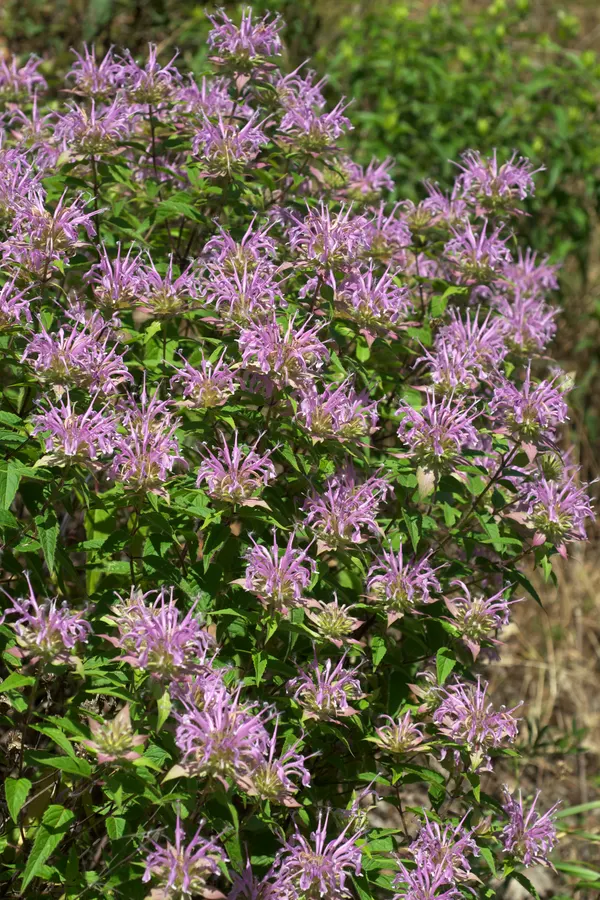
Distinctive Lamiaceae (square stem, tubular flowers); no dangerous lookalike at the food level.
Nutritional notes
Aromatic, low-calorie; flavonoids.
Healing traditions
Related plants
Sources (3)
- Wikipedia (Monarda fistulosa)
- Herbal Academy
- EthnoPharm
Sourcing & resources
Affiliate links — we may earn a small commission at no extra cost to you.