
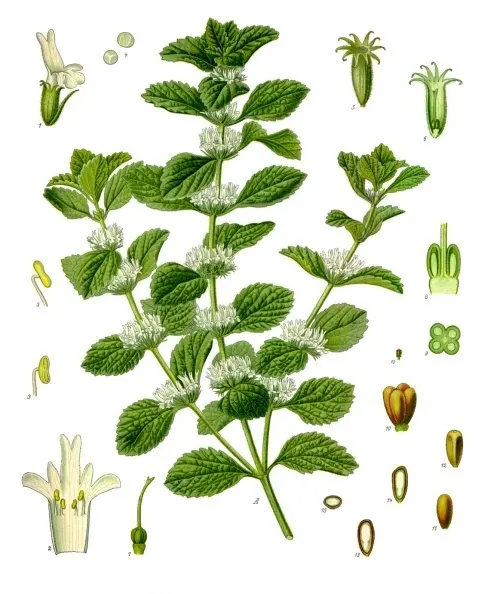
White horehound
Marrubium vulgare
Other names: common horehound, შავბალახა (Geo., folk)
Photo credit: Franz Eugen Köhler / Wikimedia Commons
Safety information
Safety information
Toxicity: mild - large doses may cause GI upset, vomiting, and possible cardiac arrhythmia at very high intake (reported); hypotensive/hypoglycemic at high doses in animal studies.
Contraindications: pregnancy and breastfeeding (avoid - possible emmenagogue/uterine activity, insufficient data); Lamiaceae allergy possible; gallstones/biliary obstruction (bitter, choleretic reputation).
Interactions: theoretical additive with antihypertensives and antidiabetics (animal data); possible interaction with antiarrhythmics at high doses; limited human data.
Pregnancy & breastfeeding: avoid in pregnancy and breastfeeding (possible emmenagogue/uterine activity)
Evidence level
Documented in systematic traditional medicine literature.
Preparations
infusion · aerial parts
Part used: aerial parts
Traditional use: expectorant for cough/cold, mild dyspepsia, loss of appetite
Proposed mechanism: bitter diterpene marrubiin
Associated conditions
Healing traditions
Related plants
Sources (3)
- EMA assessment report on Marrubium vulgare L., herba (EMA/HMPC, 2013)
- EMA: Marrubii herba (EMA/HMPC)
- Marrubium vulgare phytochemical/pharmacological overview (PMC7355696)
Sourcing & resources
Affiliate links — we may earn a small commission at no extra cost to you.