
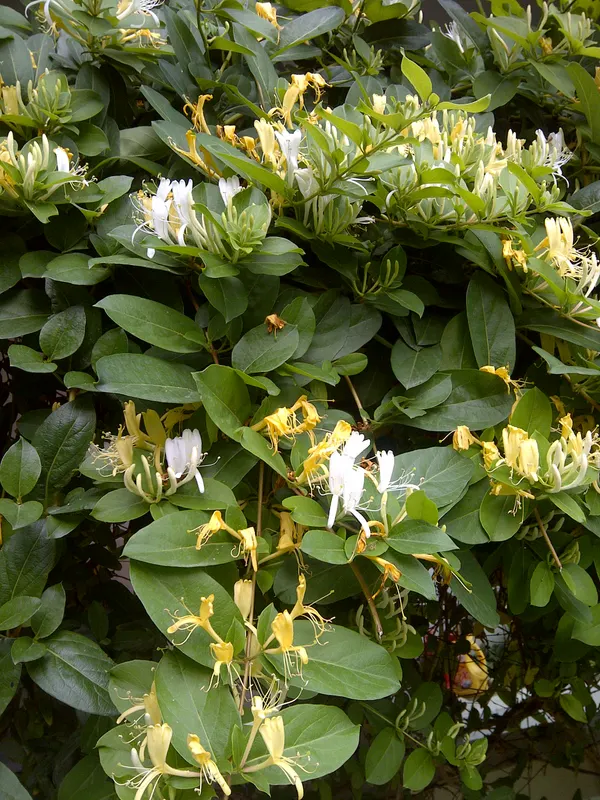
Japanese honeysuckle flower
Lonicera japonica
Other names: 金银花 / 金銀花 jīnyínhuā; 忍冬藤 rěndōngténg, Japanese honeysuckle flower
Edible plantPhoto credit: Aftabbanoori
Safety information
Safety information
Toxicity: Flower/nectar generally low toxicity. All parts other than flower nectar potentially toxic in very large quantities due to saponins.
Contraindications: Pregnancy/clinical data limited.
Interactions: Not well characterized.
Pregnancy & breastfeeding: Data limited.
Evidence level
Supported by laboratory or animal studies; not yet confirmed in humans.
Preparations
infusion/decoction · flower bud
Part used: flower bud
Traditional use: clear heat and resolve toxicity; febrile/inflammatory and warm-disease patterns, cold/influenza formulas
Proposed mechanism: chlorogenic acid, luteolin, iridoid and secoiridoid glycosides
extract · flower bud
Part used: flower bud
Associated conditions
Edibility
Edible parts: Flowers/nectar edible (sweet nectar); flower buds used as tea.
Toxic lookalike warning
Many Lonicera species have toxic berries - do NOT eat honeysuckle berries; plant is a noxious invasive in many regions.
Nutritional notes
Functional tea/edible flower; phenolic acids (chlorogenic, caffeic), flavonoids (luteolin), iridoid glycosides.
Healing traditions
Related plants
Sources (2)
- Lonicera japonica (Wikipedia), English, accessed 2026, https://en.wikipedia.org/wiki/Lonicera_japonica
- Shang et al., Lonicera japonica Thunb.: Ethnopharmacology, phytochemistry and pharmacology, J Ethnopharmacol 2011, PMC7127058
Sourcing & resources
Affiliate links — we may earn a small commission at no extra cost to you.