
Safety information
Safety information
Toxicity: Generally well tolerated; mild GI symptoms, headache. Phytoestrogen content raises theoretical concern in hormone-sensitive conditions. | None known per source; generally low. Phytoestrogen/coumarin content warrants caution (modern).
Contraindications: Caution/avoid in hormone-sensitive conditions (breast, uterine, ovarian cancer; endometriosis) and in pregnancy/breastfeeding (phytoestrogen/uterine concern). Bleeding disorders (contains coumarins). | None specified by source. Modern: hormone-sensitive conditions and pregnancy (phytoestrogens).
Interactions: Theoretical interaction with hormonal therapies (HRT, tamoxifen), and with anticoagulants/antiplatelets (coumarin content) - consult provider. | None specified by source. Modern: theoretical interaction with anticoagulants and hormonal therapies.
Pregnancy & breastfeeding: Avoid in pregnancy/breastfeeding (phytoestrogen/uterine concern). | Caution (phytoestrogens) (modern).
Evidence level
Supported by clinical trials in humans.
Preparations
infusion, fluid extract; fomentations/poultices (external) · blossoms
Part used: blossoms
Traditional use: bronchial and whooping-cough; fomentations/poultices applied to cancerous growths(Folk and historical sources have not been validated by clinical research.)
Proposed mechanism: alterative and antispasmodic (Grieve); contains isoflavone phytoestrogens (modern; basis of menopause-supplement marketing)
infusion (tea) / standardized isoflavone extract (capsule) / tincture · flower heads
Part used: flower heads
Traditional use: folk use as an alterative/cough and skin herb; modern promotion of isoflavone extracts for menopausal symptoms (hot flashes), bone health and cardiovascular markers
Proposed mechanism: isoflavones (formononetin, biochanin A to genistein/daidzein) are phytoestrogens that bind estrogen receptors (relative ER-beta preference) - basis of both proposed menopausal benefit and hormone-sensitivity cautions
Dosage note (descriptive only): menopause trials used standardized isoflavone extracts (commonly ~40-80 mg isoflavones/day); trial regimen, descriptive only
Associated conditions
Edibility
Edible parts: Red clover flowers/leaves eaten in small amounts (flowers in teas, salads; sprouted seeds) as a minor wild food, but large quantities not advised (phytoestrogens, raw legume considerations) | flowers in teas, traditionally a trail nibble
Toxic lookalike warning
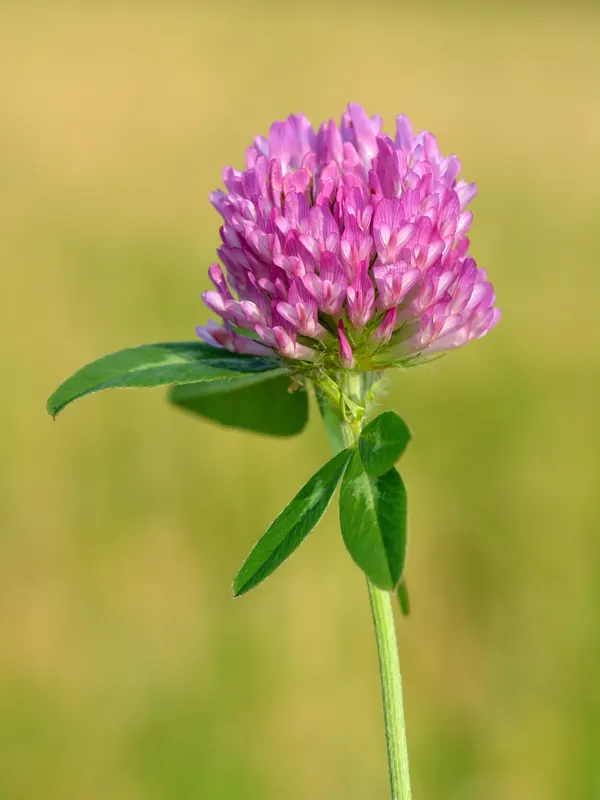
Cultivated/forage plant; positively identify. | Confirm trifoliate leaves and the globular red-purple head; do not eat large quantities of raw clover or confuse with other legumes.
Nutritional notes
Minor wild-food use; isoflavones are the notable functional constituent. | Forage legume; flowers in teas.
Healing traditions
Related plants
Sources (3)
- Grieve M., A Modern Herbal (1931) — Maud Grieve (1931)
- NCCIH/MedlinePlus red clover information
- menopause isoflavone trial/review literature
Sourcing & resources
Affiliate links — we may earn a small commission at no extra cost to you.