
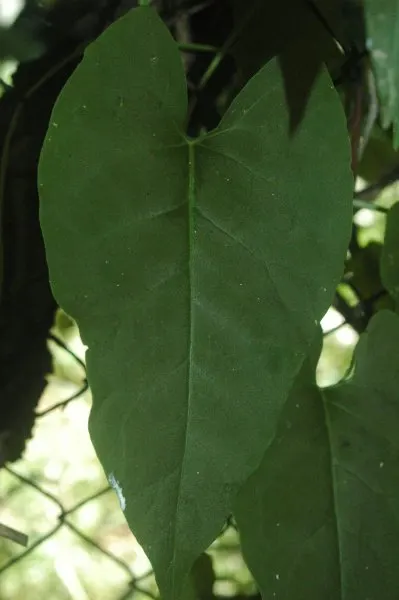
He shou wu / fo-ti
Reynoutria multiflora
Other names: 何首乌 / 何首烏 héshǒuwū; 制何首乌 zhì héshǒuwū, He shou wu / fo-ti
Photo credit: Doronenko
This plant carries serious safety risks. All information is for educational reference only.
Safety information
Toxicity: SERIOUS (idiosyncratic). One of the most frequently reported causes of herb-induced acute liver injury worldwide; cases of hepatitis, cholestatic injury, and liver failure documented, including with prepared form and dietary supplements. Stilbene/anthraquinone constituents implicated. Risk partly idiosyncratic (genetic susceptibility reported).
Contraindications: Pre-existing liver disease; avoid concurrent hepatotoxic agents; pregnancy/clinical data limited; stop and seek care if jaundice/dark urine/abdominal pain develop.
Interactions: Additive hepatotoxicity with other liver-stressing drugs/herbs; possible effects on drug metabolism.
Pregnancy & breastfeeding: Data limited.
Evidence level
Supported by laboratory or animal studies; not yet confirmed in humans.
Preparations
This plant carries serious safety risks. All information is for educational reference only.
FLAGGED · root tuber
Part used: root tuber
Traditional use: prepared form tonifies liver/kidney, nourishes blood/essence, blackens hair; raw form moistens bowel and resolves toxicity
Proposed mechanism: stilbene glycosides (2,3,5,4'-tetrahydroxystilbene glucoside), anthraquinones (emodin)
Dosage note (descriptive only): FLAGGED - no how-to; processing matters for effect and toxicity
Reference only — not a dosage instruction
Associated conditions
Nutritional notes
Not a nutritional food; stilbene glycosides (2,3,5,4'-tetrahydroxystilbene glucoside) and anthraquinones (emodin).
Healing traditions
Related plants
- BhumyamalakiPhyllanthus niruriClinical
- Daruharidra (tree turmeric / Indian barberry)Berberis aristataClinical
- Bhringraj (false daisy)Eclipta prostrataClinical
- Safflower / gur gum (hong hua, false saffron)Carthamus tinctoriusClinical
- Globe artichokeCynara scolymusClinical
- Kalmegh (King of Bitters)Andrographis paniculataClinical
Sources (2)
- Reynoutria multiflora / Polygonum multiflorum (Wikipedia), English, accessed 2026, https://en.wikipedia.org/wiki/Reynoutria_multiflora
- Fo-Ti / He Shou Wu (LiverTox, NCBI Bookshelf NBK548120), English, https://www.ncbi.nlm.nih.gov/books/NBK548120/