
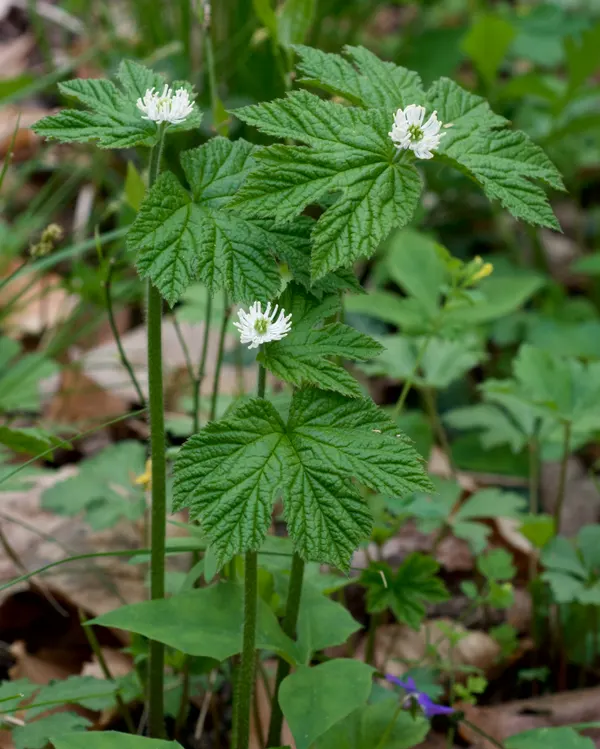
This plant carries serious safety risks. All information is for educational reference only.
Safety information
Toxicity: Serious if misused — toxic in excess; reduces B-vitamin absorption with long use. | Prolonged use may decrease vitamin B absorption.
Contraindications: Avoid with high blood pressure, in pregnancy/breastfeeding, and in children. | Contraindicated with elevated blood pressure; not recommended during pregnancy (uterine-stimulant alkaloids) or lactation.
Interactions: None specifically noted (caution given the alkaloids). | General berberine cautions; avoid with antihypertensive management given hypertension contraindication.
Pregnancy & breastfeeding: Avoid in pregnancy/breastfeeding (uterine stimulant). | Not recommended during pregnancy (uterine-stimulant alkaloids).
Evidence level
Supported by laboratory or animal studies; not yet confirmed in humans.
Preparations
This plant carries serious safety risks. All information is for educational reference only.
infusion · root and rhizome
Part used: root and rhizome
Traditional use: Traditionally used as a mucous-membrane tonic and bitter for digestive problems (peptic ulcers, colitis), for catarrhal conditions especially of the sinuses, and applied externally for skin and eye complaints.
How to prepare (traditional): Infusion: pour 1 cup of boiling water over half a teaspoon to 1 teaspoon of powdered root and infuse 10-15 minutes (unpowdered root is decocted by simmering).
Dosage note (descriptive only): Drunk three times a day. BHC: 0.5-1 g dried rhizome and root three times daily.
Reference only — not a dosage instruction
tincture · root and rhizome
Part used: root and rhizome
Traditional use: Bitter / anticatarrhal.
How to prepare (traditional): Tincture at 1:5 in 60% alcohol.
Dosage note (descriptive only): 1 ml three times a day.
Reference only — not a dosage instruction
powder · rhizome
Part used: rhizome
Traditional use: Traditionally taken for gastritis.
How to prepare (traditional): Capsules made from the powdered rhizome.
Dosage note (descriptive only): professional use only — not provided
Reference only — not a dosage instruction
tincture · rhizome
Part used: rhizome
Traditional use: Traditionally taken for excess mucus.
How to prepare (traditional): Tincture taken with water.
Dosage note (descriptive only): professional use only — not provided
Reference only — not a dosage instruction
decoction · rhizome
Part used: rhizome
Traditional use: Traditionally used as a gargle for sore throats.
How to prepare (traditional): Decoction of the rhizome, used as a gargle.
Dosage note (descriptive only): professional use only — not provided
Reference only — not a dosage instruction
infusion · rhizome
Part used: rhizome
Traditional use: Traditionally applied for yeast infections; dilute infusion used as an eyewash or mouthwash.
How to prepare (traditional): Infusion of the powder, applied topically.
Dosage note (descriptive only): professional use only — not provided
Reference only — not a dosage instruction
Associated conditions
Nutritional notes
Not a food.
Healing traditions
Related plants
Sources (2)
- Chevallier A., Encyclopedia of Herbal Medicine (2016) — Andrew Chevallier (2016)
- Hoffmann D., Medical Herbalism (2003) — David Hoffmann (2003)