
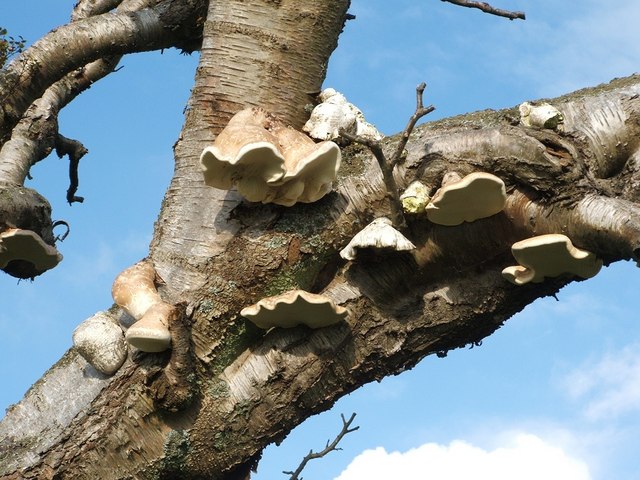
Birch Polypore (Fomitopsis betulina)
Nicknamed the "Iceman's fungus" after pieces were found among the belongings of Ötzi, the 5,300-year-old mummy discovered in the Alps — one of the oldest known examples of a human deliberately carrying a medicinal fungus, likely for its antiparasitic properties (Ötzi had intestinal parasites).
Not medical advice. For education only. This is not a dietary mushroom — it is tough, bitter, and used medicinally, not as food.
What the evidence shows
Laboratory research has found birch polypore extracts show antibacterial, antiparasitic, antiviral, anti-inflammatory and anticancer activity in cell studies — a genuinely broad preclinical pharmacological profile, consistent with its long folk-medicine reputation. However, this is entirely cell and laboratory research; there are no human clinical trials confirming these effects at any dose.
Evidence level: preclinical; historically well documented, modern human evidence absent.
How it's used
Traditionally dried and prepared as a decoction, tincture, or powder; also historically used as a styptic (to stop bleeding from small wounds) and, separately, as tinder. Too tough and bitter to eat as food.
Safety
Documented modern human safety and dosing data are limited. As with other immune-active fungi, use caution alongside immunosuppressant medication, and avoid in pregnancy and breastfeeding due to lack of safety data. Report any use to your clinician if you are on medication, given the breadth of preclinical bioactivity (antimicrobial and anti-inflammatory pathways can, in principle, interact with drugs metabolised similarly).
Quality notes
Correct identification matters — birch polypore grows specifically on birch trees and has a distinctive kidney/hoof shape; foraged material should be identified by an expert.
Sources
- Fomitopsis betulina (formerly Piptoporus betulinus): the Iceman's polypore fungus with modern biotechnological potential (PMC)
- Effects of Birch Polypore Mushroom, Piptoporus betulinus, the "Iceman Fungus", on Human Immune Cells — ResearchGate
Explore the other medicinal mushrooms or our full plant catalogue.