
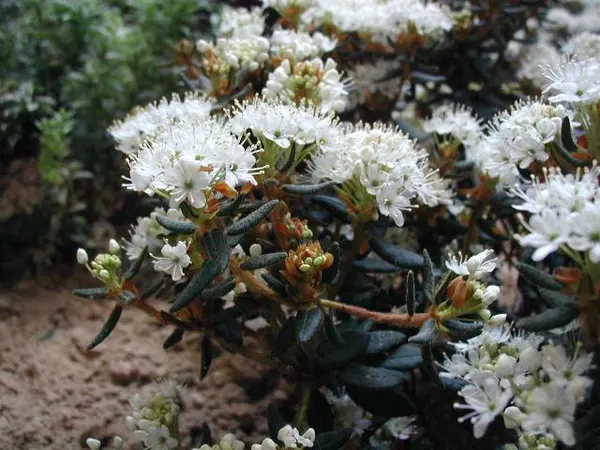
Bagulnik / Marsh Labrador tea (wild rosemary)
Rhododendron tomentosum
Photo credit: Wikimedia Commons
This plant carries serious safety risks. All information is for educational reference only.
Safety information
Toxicity: Serious. Overdose causes headache, dizziness, nausea/vomiting, agitation then CNS depression, and the oil is irritant; documented poisonings. Very narrow margin between folk 'dose' and toxic effect.
Contraindications: Pregnancy and lactation (toxic, uterine concern — contraindicated); children; CNS/neurological disease; not for self-treatment.
Interactions: Additive CNS depression with sedatives/alcohol; not well-characterised otherwise.
Pregnancy & breastfeeding: Contraindicated in pregnancy and lactation (toxic, uterine concern).
Evidence level
Reported in folk medicine sources; not clinically validated. Folk and historical sources have not been validated by clinical research.
Preparations
This plant carries serious safety risks. All information is for educational reference only.
inhalation/insect-repellent (historical) · shoots/leaves
Part used: shoots/leaves
infusion/decoction (folk cough remedy) · shoots/leaves
Part used: shoots/leaves
Traditional use: expectorant for whooping cough, bronchitis and asthma, externally for 'rheumatism'; folk insect/moth repellent(Folk and historical sources have not been validated by clinical research.)
Proposed mechanism: toxic essential oil rich in ledol/palustrol (sesquiterpenes) and grayanotoxin-type constituents -> narcotic/neurotoxic and irritant effects
Dosage note (descriptive only): NOT endorsed; narrow safety margin
Reference only — not a dosage instruction
Associated conditions
Nutritional notes
Not a food source.
Healing traditions
Related plants
Sources (1)
- Ledum/Rhododendron tomentosum essential-oil (ledol) toxicology and grayanotoxin/'mad honey' literature