
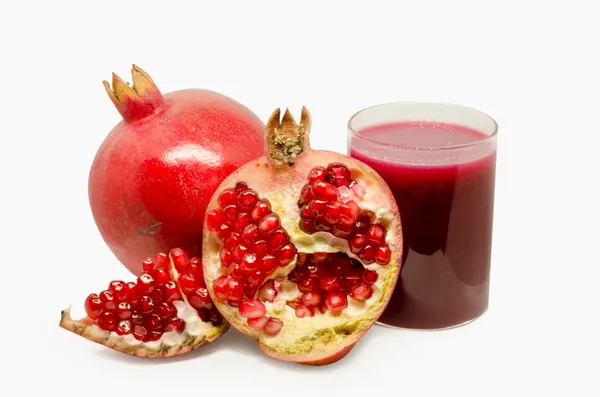
Pomegranate
Punica granatum
Other names: Pomegranate, ბროწეული (brotseuli); ტკბილი ჯიში, ბროწეული (brotseuli)
Edible plantPhoto credit: Augustus Binu : flickr
This plant carries serious safety risks. All information is for educational reference only.
Safety information
Toxicity: Rind/bark contain alkaloids (pelletierine) — bark/root preparations can be toxic in dose (nausea, vertigo); flag the bark. Fruit flesh safe. | Fruit/juice food-safe. (Root/bark - not used here - contain toxic alkaloids; not relevant to the fruit.) | Arils/juice: none known as food. The root-bark/stem-bark and to a lesser extent peel contain pelletierine alkaloids — overdose of bark/peel preparations can be toxic (the traditional tapeworm remedy had a narrow safety margin).
Contraindications: None documented for fruit; avoid concentrated bark/rind extracts. | None for fruit/juice food amounts. | Bark/peel medicinal preparations: pregnancy and children (alkaloid toxicity) — avoid; juice in large amounts theoretical interaction.
Interactions: None documented in source. | Pomegranate juice can inhibit CYP3A4/CYP2C9 (like grapefruit) and may raise levels of some drugs (certain statins, some antihypertensives) and interact with warfarin - relevant at high juice intake. (Safety gate.) | Pomegranate juice can inhibit intestinal CYP3A4 (similar in principle to grapefruit) → may raise levels of some CYP3A4 substrates; theoretical additive with antihypertensives; possible effect on warfarin.
Pregnancy & breastfeeding: Not noted (food). | Bark/peel medicinal preparations contraindicated (alkaloid toxicity).
Evidence level
Supported by clinical trials in humans.
Preparations
This plant carries serious safety risks. All information is for educational reference only.
rind decoction / powder / salve · rind/peel
Part used: rind/peel
Traditional use: dental/oral disease, gum bleeding, disordered menses, diarrhoea, hemorrhoids, intestinal worms, diabetes (ჭყურტი)(Folk and historical sources have not been validated by clinical research.)
eaten fresh / juice · fruit/arils
Part used: fruit/arils
Traditional use: anemia, TB, dysentery, poor appetite, pneumonia, poisoning, jaundice (sweet variety)(Folk and historical sources have not been validated by clinical research.)
Proposed mechanism: punicalagins/ellagitannins, anthocyanins
juice with butter · juice
Part used: juice
Traditional use: severe dysentery (melted butter + juice)(Folk and historical sources have not been validated by clinical research.)
edible-raw · arils
Part used: arils
Traditional use: eaten fresh(Folk and historical sources have not been validated by clinical research.)
beverage · juice
Part used: juice
Traditional use: juice, sour reduction 'narsharab'
Proposed mechanism: polyphenols/ellagitannins; blood pressure/oxidative markers
cooked · arils/juice
Part used: arils/juice
Traditional use: sauces, preserves(Folk and historical sources have not been validated by clinical research.)
decoction · peel/rind
Part used: peel/rind
Traditional use: folk antidiarrheal/anthelmintic (FLAGGED)
Proposed mechanism: pelletierine alkaloids
Dosage note (descriptive only): narrow safety margin
Reference only — not a dosage instruction
dried-flower infusion · dried flower
Part used: dried flower
Traditional use: high blood pressure(Folk and historical sources have not been validated by clinical research.)
Associated conditions
Edibility
Edible parts: Arils edible raw; rind/bark NOT for casual ingestion. | Arils and juice. | arils and juice
Toxic lookalike warning
None practical (cultivated fruit). | The fruit is unmistakable; the caution is the bark/peel medicinal preparations (alkaloid overdose), not a food lookalike.
Nutritional notes
Rich in punicalagins/ellagitannins and anthocyanins (antioxidants), vitamin C, potassium. | Arils/juice rich in vitamin C, vitamin K, potassium, folate and potent polyphenols (punicalagins, anthocyanins, ellagic acid) — a recognised antioxidant functional fruit; arils also provide fibre.
Healing traditions
Related plants
- Daruharidra (tree turmeric / Indian barberry)Berberis aristataClinical
- Musta (nutgrass)Cyperus rotundusClinical
- Khadira (black catechu / cutch tree)Acacia catechuClinical
- Kalgan / TormentilPotentilla erectaClinical
- Sangre de grado / Dragon's bloodCroton lechleriClinical
- Amur cork tree bark / huang bai (黄柏)Phellodendron amurenseClinical
Sources (5)
- ნუნუ ღლიღვაშვილი-მარგიანი, "მედეადან დღემდე" (Nunu Ghlighvashvili-margiani, "From Medea to the present day")
- Bussmann et al., A comparative ethnobotany ... Republic of Georgia, J Ethnobiol Ethnomed 2016;12:43
- Mtsire Karabadini, Part II (Surmanidze, 1990) — Ramaz Surmanidze (1990)
- Karabadini (Khelaia ed., 2009) — Nani Khelaia (ed.) (2009)
- Bussmann et al., Unity in diversity — food plants of Sakartvelo, 2021