
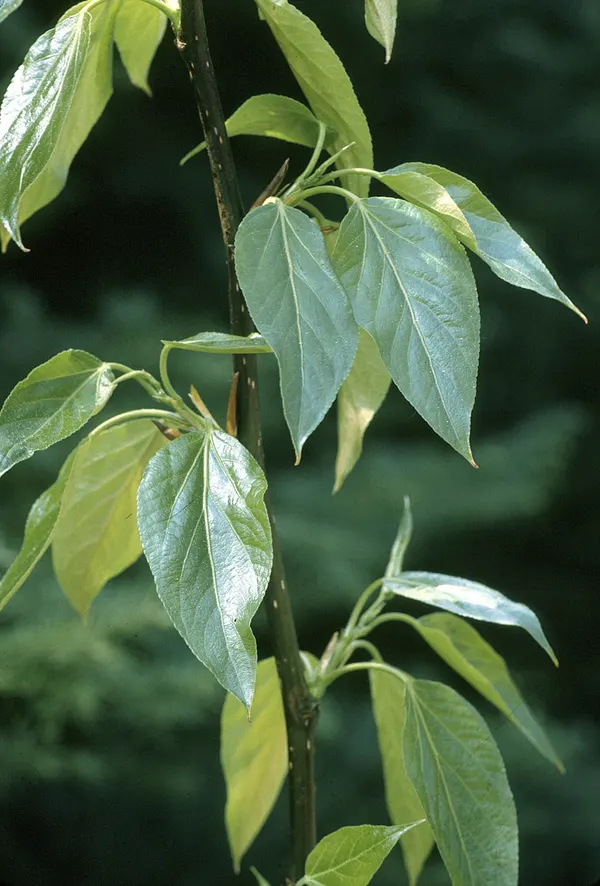
Balsam poplar / cottonwood (balm)
Populus balsamifera
Edible plantPhoto credit: Lynden Gerdes
Safety information
Safety information
Toxicity: Topical low risk; salicylate-class cautions internally.
Contraindications: Salicylate/aspirin or bee-product/propolis (Populus-derived) allergy; pregnancy (salicylate, internal).
Interactions: Additive with anticoagulants/NSAIDs (salicylate).
Pregnancy & breastfeeding: Pregnancy: salicylate (internal) — caution.
Evidence level
Supported by laboratory or animal studies; not yet confirmed in humans.
Preparations
decoction · inner bark
Part used: inner bark
poultice · leaf buds
Part used: leaf buds
bud-infused oil/salve ('balm of Gilead') · leaf buds
Part used: leaf buds
Traditional use: salve for skin, wounds, burns, chapping, sore muscles; inner-bark/bud decoctions for coughs, colds, pain
Proposed mechanism: buds contain salicylates and phenolic resins (populin, salicin, caffeates) — anti-inflammatory/antimicrobial in vitro
Associated conditions
Edibility
Edible parts: Inner bark/cambium is a documented famine food (peeled, eaten in spring); catkins occasionally eaten.
Toxic lookalike warning
Confirm Populus ID.
Nutritional notes
Inner bark: emergency carbohydrate; spring cambium has some sugars/vitamin C.
Healing traditions
Related plants
Sources (2)
- Moerman, Native American Ethnobotany — Daniel Moerman
- USDA NRCS PLANTS Database
Sourcing & resources
Affiliate links — we may earn a small commission at no extra cost to you.