
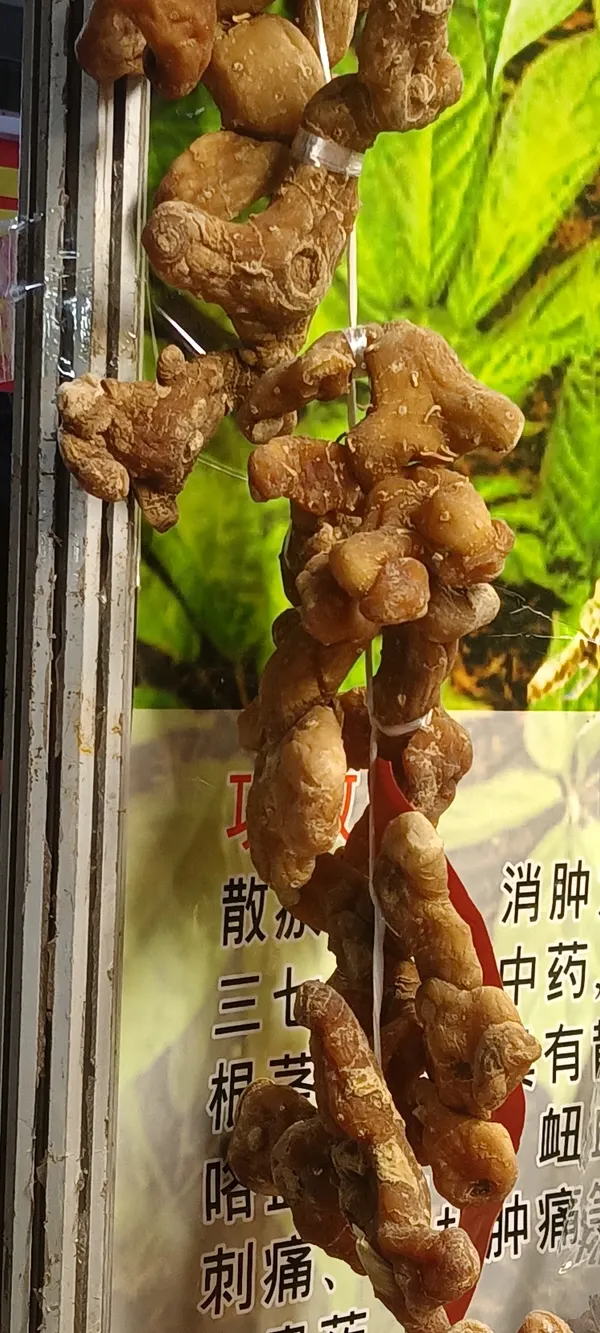
Siberian Solomon's seal / huang jing (黄精)
Polygonatum sibiricum
Edible plantPhoto credit: Fumikas Sagisavas
Safety information
Safety information
Toxicity: Low once processed; raw rhizome irritates the throat (needles/saponins) — must be processed.
Contraindications: Spleen deficiency with dampness/loose stools, phlegm-damp cough (TCM).
Interactions: Additive with hypoglycemics (theoretical).
Evidence level
Supported by laboratory or animal studies; not yet confirmed in humans.
Preparations
nine-steam-nine-sun processing (essential) · rhizome
Part used: rhizome
tonic food/congee · rhizome
Part used: rhizome
in formula · rhizome
Part used: rhizome
decoction · rhizome
Part used: rhizome
Traditional use: tonifies qi and yin, strengthens the spleen, moistens the lung, supplements the kidney; fatigue, dry cough, wasting-thirst, weakness
Proposed mechanism: polysaccharides (PSP), steroidal saponins, flavonoids — immunomodulatory, antioxidant, anti-fatigue, hypoglycemic, gut-barrier/prebiotic
Dosage note (descriptive only): must be processed (nine-steam-nine-sun)
Associated conditions
Edibility
Edible parts: Processed — listed in China as medicine-food homologous; processed rhizome used in congee, soups, tea.
Toxic lookalike warning
Polygonatum can be confused with lily-of-the-valley (Convallaria, cardiotoxic) and other woodland rhizomes/shoots — positively identify before any wild use; eat only properly processed huang jing.
Nutritional notes
Polysaccharides, sugars (functional-tonic food).
Healing traditions
Related plants
Sources (2)
- [E43] Polygonatum sibiricum polysaccharide intestinal-barrier review (Front. Pharmacol.)
- [E44] natural vs processed P. sibiricum bioactive-components review
Sourcing & resources
Affiliate links — we may earn a small commission at no extra cost to you.