
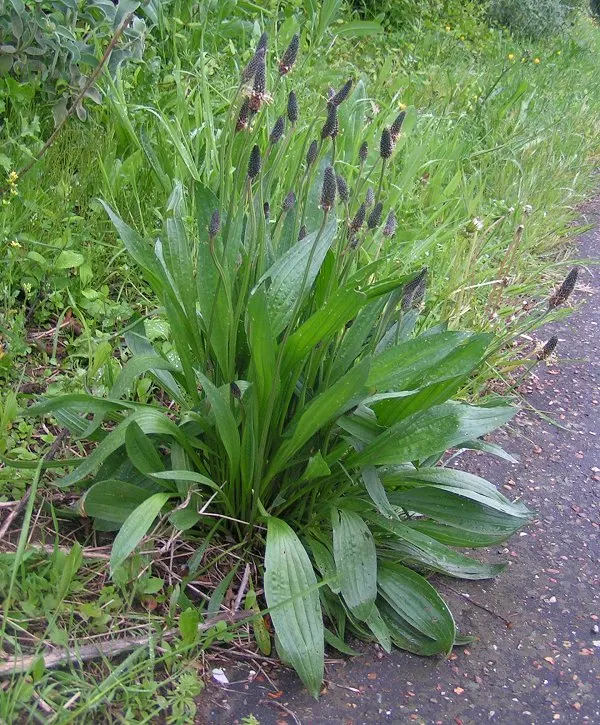
Ribwort Plantain
Plantago lanceolata
Other names: Ribwort Plantain
Edible plantPhoto credit: sannse
Safety information
Safety information
Toxicity: Generally well tolerated; rare allergic reactions.
Contraindications: Hypersensitivity to the plant. EMA age limits by preparation. Limited pregnancy/breastfeeding data.
Interactions: None established on public summary; mucilage may delay absorption of co-administered oral drugs (separate dosing, general principle).
Pregnancy & breastfeeding: Limited pregnancy/breastfeeding data.
Evidence level
Documented in systematic traditional medicine literature.
Preparations
infusion (tea) / syrup / liquid extract / topical poultice or wash · leaf
Part used: leaf
Traditional use: symptomatic relief of irritation of mouth/throat mucosa and associated dry cough; topically for minor skin inflammation/insect bites and superficial wounds
Proposed mechanism: mucilage (demulcent film over irritated mucosa), iridoid glycosides (aucubin - antimicrobial/anti-inflammatory in vitro), tannins (astringent/wound-protective) - preclinical/mechanistic
Dosage note (descriptive only): traditional infusion ~a few grams dried leaf per cup several times daily, or syrups per product (EMA); descriptive only
Associated conditions
Edibility
Edible parts: young leaves of P. lanceolata and P. major edible (best young and cooked; older leaves stringy); seeds of related Plantago (psyllium) are a bulk-fiber food/laxative
Toxic lookalike warning
Basal-rosette leaves can be confused with toxic rosette plants (e.g., young foxglove Digitalis); plantain has distinctive parallel-ribbed veins and a leafless flower spike - positively identify before eating.
Nutritional notes
Young leaves provide vitamins A and C, minerals, fiber; minor wild-food use.
Healing traditions
Related plants
Sources (1)
- EMA/HMPC Plantaginis lanceolatae folium monograph & public summary
Sourcing & resources
Affiliate links — we may earn a small commission at no extra cost to you.