
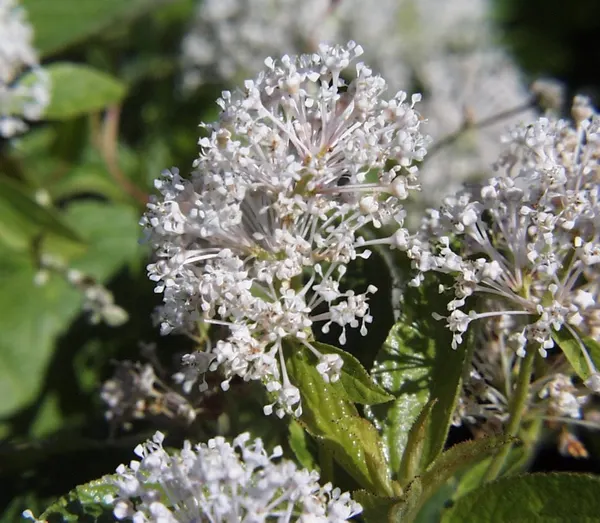
New Jersey tea (red root)
Ceanothus americanus
Edible plantPhoto credit: unknown author, USFWS
Safety information
Safety information
Toxicity: Low/none known at customary use; coagulant activity noted.
Contraindications: Anticoagulant therapy (theoretical, due to reported procoagulant action); pregnancy data limited.
Interactions: Theoretical with anticoagulants.
Pregnancy & breastfeeding: Pregnancy data limited.
Evidence level
Reported in folk medicine sources; not clinically validated. Folk and historical sources have not been validated by clinical research.
Preparations
decoction (root, astringent/lymphatic) · root/root bark
Part used: root/root bark
Traditional use: sore throat, mouth/throat infections, fevers, astringent(Folk and historical sources have not been validated by clinical research.)
Proposed mechanism: astringent tannins; coagulant-acting alkaloids (ceanothine) noted historically
leaf infusion (caffeine-free tea) · leaf
Part used: leaf
Traditional use: beverage tea (tea substitute during American Revolution)(Folk and historical sources have not been validated by clinical research.)
Associated conditions
Edibility
Edible parts: Leaves as a caffeine-free herbal tea. Root not a food.
Nutritional notes
Tannins, antioxidants (tea).
Healing traditions
Related plants
Sources (2)
- Moerman, Native American Ethnobotany — Daniel Moerman
- USDA NRCS PLANTS Database
Sourcing & resources
Affiliate links — we may earn a small commission at no extra cost to you.