
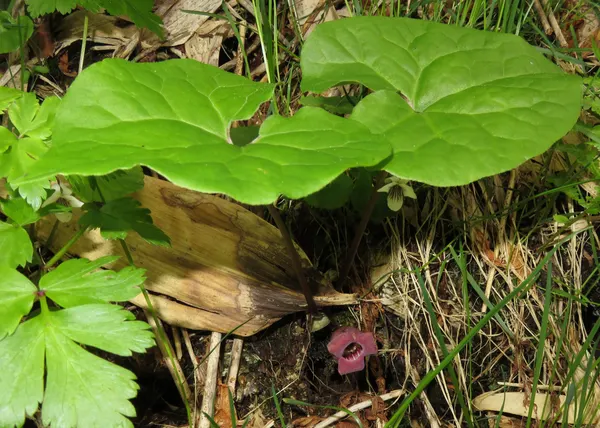
This plant carries serious safety risks. All information is for educational reference only.
Safety information
Toxicity: Serious safety concerns. Contains safrole/methyleugenol (carcinogenic) and trace aristolochic acids (nephrotoxic/carcinogenic — WHO Class-1 carcinogen for AA-I); overdose of volatile oil can cause respiratory depression.
Contraindications: Pregnancy; renal impairment; not for self-use; avoid large/prolonged dosing.
Interactions: Classic 'eighteen incompatibilities' pairing avoided with Veratrum (li lu); nephrotoxin co-exposure risk.
Pregnancy & breastfeeding: Avoid in pregnancy.
Evidence level
Supported by laboratory or animal studies; not yet confirmed in humans.
Preparations
This plant carries serious safety risks. All information is for educational reference only.
decoction (low dose; long-decocted) in formula — restricted herb · root and rhizome
Part used: root and rhizome
Traditional use: warms the lung, disperses cold, opens orifices, relieves pain; cold-pattern headache, toothache, nasal congestion, cough/wheeze
Proposed mechanism: volatile oil with safrole and methyleugenol (genotoxic carcinogens) plus trace aristolochic acid analogues — analgesic/anti-inflammatory
Dosage note (descriptive only): Chinese Pharmacopoeia 2020 limits AA-I to <0.001% and restricts the dose
Reference only — not a dosage instruction
Associated conditions
Nutritional notes
n/a
Healing traditions
Related plants
Sources (2)
- [E15] aristolochic acids nephrotoxicity/carcinogenicity systematic overview
- [E14] Asarum heterotropoides aristolochic-acid quantitation & toxicity (Front. Pharmacol.)