
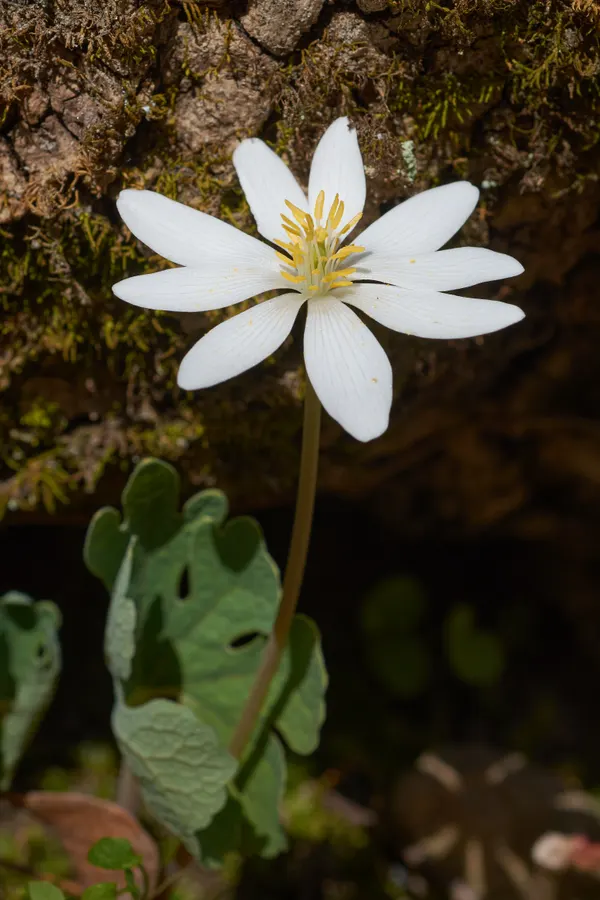
This plant carries serious safety risks. All information is for educational reference only.
Safety information
Toxicity: Serious — at high doses causes nausea, vomiting, burning of contacted mucous membranes, bradycardia, hypotension; topical irritant.
Contraindications: Best avoided in pregnancy and lactation (potent active constituents).
Interactions: None specifically reported.
Pregnancy & breastfeeding: Best avoided in pregnancy and lactation.
Evidence level
Supported by laboratory or animal studies; not yet confirmed in humans.
Preparations
This plant carries serious safety risks. All information is for educational reference only.
decoction · root
Part used: root
Traditional use: Traditionally used as a stimulating expectorant for chronic congestive lung conditions (bronchitis, emphysema), and (sanguinarine) historically in oral-hygiene products (a low-dose, practitioner herb).
How to prepare (traditional): A potent alkaloid-rich root; the book gives only very low doses. Because of its potency and emetic/cathartic/cardioactive action, actionable home dosing is withheld here.
Dosage note (descriptive only): professional use only - not provided
Reference only — not a dosage instruction
Associated conditions
Healing traditions
Related plants
Sources (1)
- Hoffmann D., Medical Herbalism (2003) — David Hoffmann (2003)