
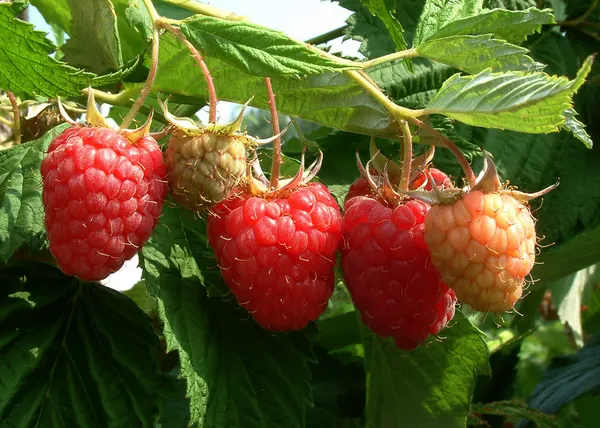
Raspberry (Raspberry leaf)
Rubus idaeus
Other names: Raspberry (Raspberry leaf)
Edible plantPhoto credit: Kollányi Gábor
Safety information
Safety information
Toxicity: None known for normal culinary/tea use; mild.
Contraindications: None specified by source. Modern: pregnancy use is debated; consult a clinician.
Interactions: None specified by source.
Pregnancy & breastfeeding: Use debated; consult a clinician (modern).
Evidence level
Documented in systematic traditional medicine literature.
Preparations
infusion · leaf
Part used: leaf
Traditional use: Traditionally used in pregnancy to tone the uterus (reputedly strengthening contractions during labour), and as an astringent for diarrhoea, mouth ulcers, bleeding gums and (as a gargle) sore throats.
How to prepare (traditional): Infusion: pour 1 cup of boiling water over 2 teaspoons of dried herb and infuse 10-15 minutes.
Dosage note (descriptive only): May be drunk freely. USP: 4-8 g dried herb daily.
tincture · leaf
Part used: leaf
Traditional use: Uterine tonic / astringent.
How to prepare (traditional): Tincture at 1:5 in 40% alcohol.
Dosage note (descriptive only): 2-4 ml three times a day.
Associated conditions
Edibility
Edible parts: fruit raw or cooked (jams, syrups, wine); leaves used as tea
Toxic lookalike warning
Raspberry fruit is distinctive, but distinguish Rubus canes from non-edible plants; eat no wild berry unless positively identified.
Nutritional notes
Fruit contains fruit-sugar, citric/malic acids, pectin, mineral salts, vitamins; cooling, subacid.
Healing traditions
Related plants
- Daruharidra (tree turmeric / Indian barberry)Berberis aristataClinical
- Musta (nutgrass)Cyperus rotundusClinical
- Khadira (black catechu / cutch tree)Acacia catechuClinical
- Kalgan / TormentilPotentilla erectaClinical
- Sangre de grado / Dragon's bloodCroton lechleriClinical
- Amur cork tree bark / huang bai (黄柏)Phellodendron amurenseClinical
Sources (1)
- Grieve M., A Modern Herbal (1931) — Maud Grieve (1931)
Sourcing & resources
Affiliate links — we may earn a small commission at no extra cost to you.