
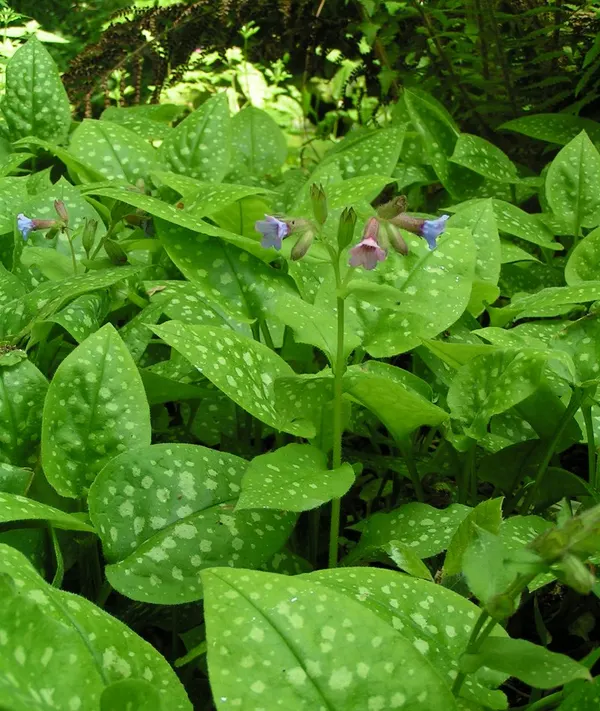
Lungwort
Pulmonaria officinalis
Other names: common lungwort, Jerusalem cowslip, spotted dog, Pulmonariae herba
Edible plantPhoto credit: Wikimedia Commons
Safety information
Safety information
Toxicity: Generally low at traditional doses. It is a Boraginaceae member (a family known for hepatotoxic pyrrolizidine alkaloids, PAs), but analyses report PAs are absent or only at trace levels in P. officinalis leaf - still, prudence dictates limiting prolonged/high-dose use.
Contraindications: Pregnancy and lactation - avoid (Boraginaceae/PA caution). Pre-existing liver disease - caution. Long-term continuous use not advised.
Interactions: None well documented; theoretical caution with other potentially hepatotoxic substances given the family.
Pregnancy & breastfeeding: avoid in pregnancy and lactation (Boraginaceae/PA caution)
Evidence level
Reported in folk medicine sources; not clinically validated. Folk and historical sources have not been validated by clinical research.
Preparations
infusion · aerial parts
Part used: aerial parts
Traditional use: coughs, bronchial catarrh, hoarseness (demulcent/mild expectorant)(Folk and historical sources have not been validated by clinical research.)
Proposed mechanism: mucilage and allantoin soothe irritated mucous membranes
Associated conditions
Edibility
Edible parts: young leaves have folk culinary use (salads, potherb) in some regions; raw or cooked
Toxic lookalike warning
as a borage relative, avoid confusion with high-PA Boraginaceae (comfrey Symphytum, Echium, Pulmonaria hybrids); limit consumption and ensure positive ID
Nutritional notes
mucilage, allantoin, flavonoids, vitamin C, silicic acid; minor functional role only
Healing traditions
Related plants
Sources (2)
- Assessment of Antioxidant Activity and Genotoxicity/Antigenotoxicity of Pulmonaria officinalis Ethanolic Extract (PMC)
- Pulmonaria obscura and P. officinalis Extracts as Mitigators of Peroxynitrite-Induced Oxidative Stress and COX-2 Inhibitors (PMC)
Sourcing & resources
Affiliate links — we may earn a small commission at no extra cost to you.