
Safety information
Safety information
Toxicity: Mild. Pine essential oil must not be ingested undiluted (irritant; aspiration risk if it enters airways); needle/bud teas are mild.
Contraindications: Asthma/whooping cough/bronchospasm — avoid inhaled/applied essential oil near the face of infants and small children (laryngospasm caution for volatile oils); essential oil not for internal use; pregnancy/lactation (essential-oil caution).
Interactions: None well-characterised for the teas.
Pregnancy & breastfeeding: Essential-oil caution in pregnancy/lactation.
Evidence level
Documented in systematic traditional medicine literature.
Preparations
inhalation; resin salve · resin
Part used: resin
Traditional use: steam inhalation, salves
Dosage note (descriptive only): essential oil must not be ingested undiluted
bud decoction/syrup · buds
Part used: buds
Traditional use: expectorant for cough and bronchitis
Proposed mechanism: buds/needles rich in essential oil (alpha-pinene, limonene), vitamin C, resins
needle infusion (vitamin tea) · needles
Part used: needles
Traditional use: vitamin-C/scurvy tonic
green-cone syrup/honey (folk) · young green cones
Part used: young green cones
Traditional use: cough and immune remedy(Folk and historical sources have not been validated by clinical research.)
Associated conditions
Edibility
Edible parts: Needles (vitamin tea), buds and young green cones (syrups/jams) used as food/flavouring; pine nuts of Pinus sibirica/cembra are the edible seed (different species).
Toxic lookalike warning
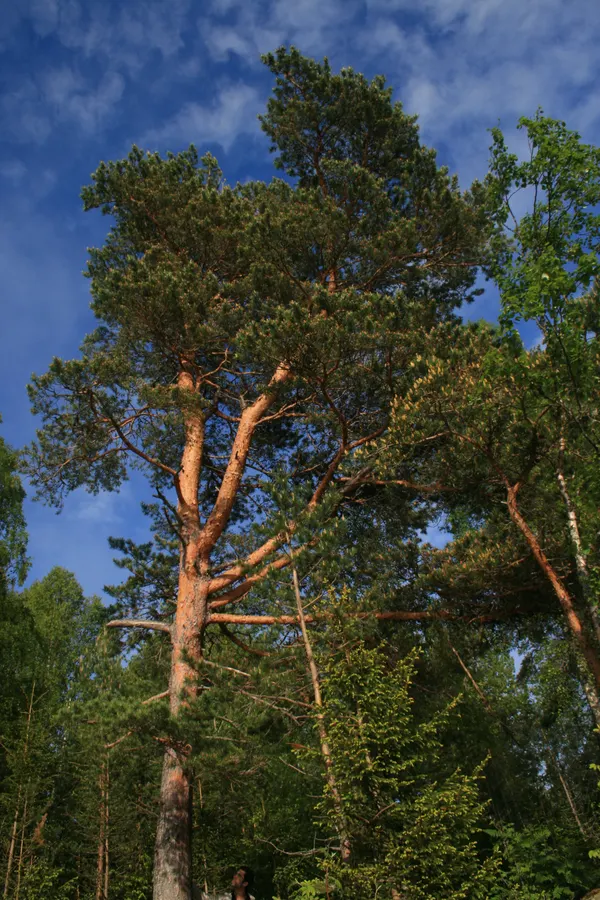
Never confuse Pinus with the highly toxic yew (Taxus baccata) — yew has flat soft dark-green needles and red arils and is deadly; identify true pine (paired/bundled needles, woody cones) with certainty.
Nutritional notes
Needles are a notable vitamin-C source (anti-scorbutic); pine-nut seeds (other spp.) are nutrient-dense.
Healing traditions
Related plants
Sources (1)
- EMA/HMPC Pini aetheroleum monograph
Sourcing & resources
Affiliate links — we may earn a small commission at no extra cost to you.