
This plant carries serious safety risks. All information is for educational reference only.
Safety information
Toxicity: Fruit none known; leaves/bark are not for self-use (abortifacient).
Contraindications: Do not use leaves/bark in pregnancy.
Interactions: None specifically noted.
Pregnancy & breastfeeding: Do not use leaves/bark in pregnancy (abortifacient).
Evidence level
Supported by laboratory or animal studies; not yet confirmed in humans.
Preparations
This plant carries serious safety risks. All information is for educational reference only.
decoction · leaf
Part used: leaf
Traditional use: Traditionally for diarrhea; leaves also taken for bloating, gas, coughs.
How to prepare (traditional): Decoction of the leaves or bark.
Dosage note (descriptive only): For diarrhea, take about 75 ml 3 times daily.
Reference only — not a dosage instruction
poultice · other
Part used: other
Traditional use: Traditionally applied to help wounds heal and to soothe the skin.
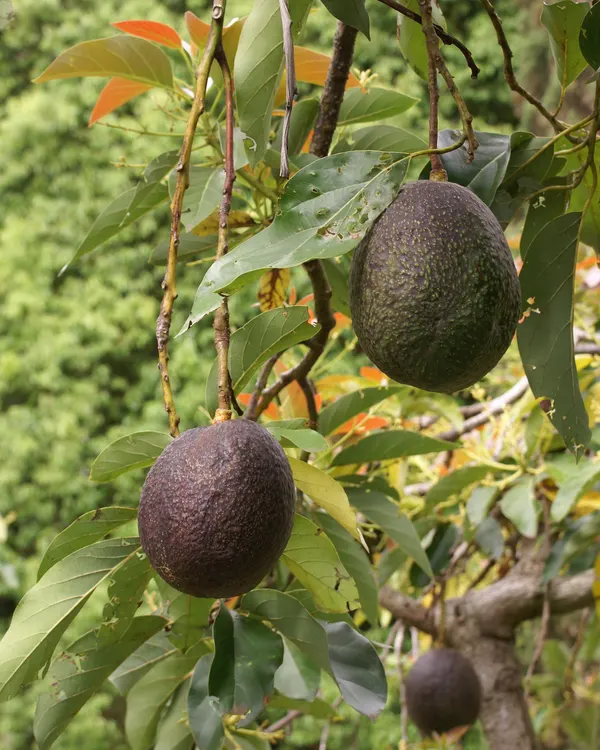
How to prepare (traditional): Fruit pulp mashed and applied externally.
Dosage note (descriptive only): Apply a little mashed pulp 3 times a day.
Reference only — not a dosage instruction
oil · seed
Part used: seed
Traditional use: Nourishes/softens skin and is massaged into the scalp to improve hair growth.
How to prepare (traditional): Expressed oil of the avocado seed rubbed onto the skin.
Dosage note (descriptive only): Rub a little oil on the area 3 times a day.
Reference only — not a dosage instruction
Associated conditions
Edibility
Edible parts: the fruit is a nutritious food (even baby food); leaves/bark are NOT food
Toxic lookalike warning
Do not consume the leaves or bark.
Nutritional notes
Fruit rich in unsaturated fats, protein, vitamins A, B1, B2 — functional food.
Healing traditions
Related plants
- Daruharidra (tree turmeric / Indian barberry)Berberis aristataClinical
- Musta (nutgrass)Cyperus rotundusClinical
- Khadira (black catechu / cutch tree)Acacia catechuClinical
- Kalgan / TormentilPotentilla erectaClinical
- Sangre de grado / Dragon's bloodCroton lechleriClinical
- Amur cork tree bark / huang bai (黄柏)Phellodendron amurenseClinical
Sources (1)
- Chevallier A., Encyclopedia of Herbal Medicine (2016) — Andrew Chevallier (2016)